
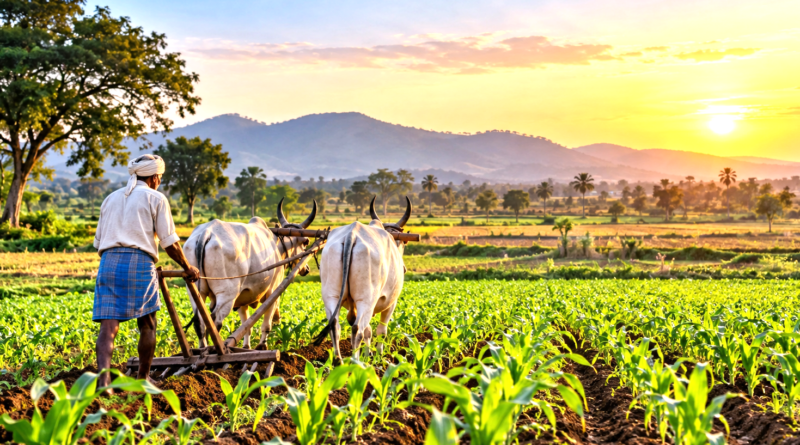
The Importance of Agriculture in India’s Economic Development – India Times Group
How Farming Supports Employment, Food Security, Rural Prosperity, and the Nation’s Economic Growth
Agriculture has been one of the strongest pillars of India’s economic development for centuries. From traditional farming communities to modern agricultural enterprises, the sector has played a crucial role in shaping the country’s economy, society, and cultural identity. Even as India advances in technology, manufacturing, infrastructure, and services, agriculture continues to influence millions of livelihoods and remains closely connected to the nation’s economic stability.
India’s agricultural landscape is remarkably diverse. Farmers cultivate rice, wheat, maize, pulses, oilseeds, sugarcane, cotton, fruits, and vegetables across different climatic regions. Livestock farming, dairy production, fisheries, poultry, and horticulture further expand the sector’s contribution to economic activity. Together, these activities provide food, raw materials, employment, and business opportunities that support both rural and urban populations.
The importance of agriculture extends far beyond the production of crops. It influences household incomes, industrial growth, international trade, consumer demand, and poverty reduction. Understanding its economic significance is essential to understanding India’s development journey and the opportunities that lie ahead.
1. Agriculture as a Foundation of the Indian Economy
Agriculture has historically been the foundation of India’s economic structure. Before the expansion of modern industries and large service-sector businesses, farming was the principal source of livelihood for a substantial proportion of the population. Villages developed around agricultural activities, local markets depended on crop production, and seasonal farming patterns influenced social and economic life.
Although the Indian economy has diversified considerably, agriculture remains important because of its extensive connections with other sectors. The production of food grains, vegetables, fruits, and commercial crops creates economic activity at every stage, from purchasing seeds and fertilizers to transporting produce and selling it to consumers.
Agricultural growth can also stimulate demand for goods and services. When farmers receive better prices and higher incomes, they may spend more on education, housing, healthcare, farm equipment, transportation, and household products. This spending supports local businesses and creates opportunities for workers in other industries.
Agriculture therefore functions as both a productive sector and a source of demand for the wider economy. Its performance can influence rural purchasing power, market confidence, and the overall pace of economic development.
2. Employment Generation and Livelihood Opportunities
One of agriculture’s most important contributions to India is employment. Farming supports cultivators, agricultural labourers, livestock owners, fishers, and people engaged in related activities. For many rural households, agricultural work remains an essential source of income.
Employment opportunities extend across the entire agricultural value chain. Farmers need workers for preparing fields, planting seeds, managing irrigation, harvesting crops, and sorting produce. Additional jobs emerge in machinery repair, seed distribution, fertilizer retail, cold storage, food processing, packaging, transportation, and agricultural marketing.
The sector also provides opportunities for people with different levels of education and technical skills. Traditional farming requires practical experience and local knowledge, while modern agriculture increasingly creates demand for agricultural engineers, soil specialists, food technologists, irrigation technicians, data analysts, and supply-chain professionals.
However, agricultural employment faces significant challenges. Small landholdings, seasonal work, uncertain earnings, and limited access to alternative occupations can make rural livelihoods vulnerable. In some regions, several family members depend on farms that cannot provide sufficient income throughout the year.
Expanding agro-processing, rural enterprises, agricultural services, and skill development can help address these problems. The objective should be to create more productive employment, improve wages, and enable rural workers to access diverse income opportunities.
3. Ensuring Food Security for a Growing Population
Food security is a fundamental requirement for economic development. A country cannot build a healthy, productive workforce without a dependable supply of nutritious food. Agriculture enables India to produce essential food commodities and reduce its dependence on external supplies for many major agricultural products.
Rice and wheat remain important staples, while pulses, vegetables, fruits, milk, eggs, and other products contribute to dietary diversity. Agricultural production also supports food distribution systems that supply households, schools, markets, restaurants, and public institutions.
Reliable food availability helps protect families against extreme price fluctuations and shortages. When domestic production is stable, the country is better positioned to manage disruptions in international markets and changes in global supply chains.
Nevertheless, food security involves more than producing sufficient quantities. Food must also be affordable, accessible, nutritious, and safely distributed. Post-harvest losses, inadequate storage, transportation difficulties, and unequal purchasing power can prevent agricultural abundance from translating into better nutrition for everyone.
India must therefore strengthen storage infrastructure, improve distribution systems, reduce food wastage, and encourage the production of diverse crops. Supporting farmers while improving access to nutritious food can create a stronger foundation for long-term human and economic development.
4. Contribution to National Income and Economic Growth
Agriculture contributes directly to India’s economic output through the production of crops, livestock products, fisheries, and related activities. Its relative share of the economy has changed as manufacturing and services have expanded, but its influence remains substantial because of the number of people who depend on it.
Agricultural performance can affect national economic growth through several channels. Higher productivity increases the value of output generated from available land, labour, water, and other resources. Better crop yields can improve farm incomes, while efficient production can make raw materials more accessible to food-processing and manufacturing businesses.
A successful agricultural season can strengthen rural consumption and support demand for consumer goods, construction materials, transport services, and agricultural machinery. Conversely, severe droughts, floods, pest outbreaks, or widespread crop damage can reduce rural incomes and weaken demand in farming-dependent regions.
Agriculture also contributes to economic resilience. A diversified agricultural system can help the country respond to changing food requirements, market disruptions, and fluctuations in commodity prices.
For these benefits to reach more households, economic development must focus on productivity and profitability rather than production volume alone. Farmers need reliable markets, appropriate technology, affordable inputs, and better opportunities to retain a reasonable share of the value generated by their produce.
5. Providing Raw Materials to Industries
Agriculture and industry are closely interconnected. Many manufacturing businesses depend on agricultural products as essential raw materials. This relationship makes farming an important contributor to industrial development and employment beyond rural areas.
The textile industry uses cotton and other natural fibres. Sugar mills depend on sugarcane, while edible-oil producers require oilseeds. Food-processing companies purchase grains, fruits, vegetables, milk, spices, and other agricultural commodities. The paper, beverage, herbal-product, and certain pharmaceutical industries also use plant-based materials.
When agricultural production is dependable, industries can plan their operations more efficiently. Local availability of raw materials may reduce transportation costs, encourage investment in processing facilities, and support the development of regional industrial clusters.
The connection works in both directions. Industrial development supplies agriculture with tractors, pumps, processing equipment, fertilizers, packaging materials, and storage technologies. Better machinery and infrastructure can improve productivity, while modern processing facilities can create new markets for farmers.
Strengthening this relationship requires consistent quality standards, transparent purchasing arrangements, efficient logistics, and appropriate support for small producers. Greater coordination between farms and industries can increase the value of agricultural output and create employment across the supply chain.
6. Rural Development and Poverty Reduction
Agriculture is closely linked to rural development because farming remains a major economic activity in many villages. Agricultural income supports household spending, local shops, repair services, transport operators, educational institutions, and other small businesses.
When farmers earn stable and reasonable incomes, the benefits can spread throughout rural communities. Families may be better able to invest in children’s education, improve their homes, access healthcare, and purchase productive assets. Local businesses can experience higher demand, encouraging further investment and employment.
Agricultural development can also reduce economic vulnerability when it creates opportunities for smallholders, tenant farmers, agricultural labourers, and landless households. Improved irrigation, access to credit, crop diversification, and stronger market connections can help rural families increase productivity and manage financial uncertainty.
However, farming alone cannot eliminate rural poverty. Low returns, fragmented landholdings, debt burdens, limited infrastructure, and dependence on rainfall can restrict economic progress. Rural development must therefore combine agricultural improvement with education, healthcare, roads, digital connectivity, vocational training, and non-farm employment.
A diversified rural economy gives households more ways to earn income and reduces excessive dependence on a single crop or agricultural season.
7. Agricultural Exports and International Trade
Agriculture contributes to India’s participation in international trade. Indian producers supply a variety of commodities to overseas markets, including rice, spices, tea, coffee, marine products, fruits, vegetables, and certain processed foods.
Agricultural exports can generate foreign exchange, support domestic production, and create employment in grading, packaging, logistics, quality testing, and port operations. Export-oriented businesses may also encourage farmers to adopt improved cultivation practices and meet higher product-quality standards.
India’s diverse climate allows different regions to specialise in particular commodities. Such specialisation can support regional economic development when producers have access to suitable infrastructure and dependable buyers.
However, agricultural exports face several challenges. International prices fluctuate, importing countries impose quality and safety requirements, and changes in trade policies can affect market access. Climate-related disruptions may also reduce production or make supply less predictable.
Export growth should therefore be supported by reliable testing facilities, traceability systems, efficient transport, improved cold chains, and stronger farmer-producer organisations. At the same time, domestic food availability and reasonable consumer prices must remain important considerations.
Developing a balanced export strategy can help Indian agriculture reach new markets while protecting the interests of both producers and consumers.
8. Technology and Modernisation of Agriculture
Technology is transforming the way agricultural activities are planned and managed. Traditional knowledge remains valuable, but modern tools can help farmers make more informed decisions, reduce waste, and improve productivity.
Mechanisation allows farmers to complete certain operations more quickly and efficiently. Drip irrigation and sprinkler systems can improve water management when properly designed. Soil testing helps identify nutrient requirements, while improved seeds and scientific crop management can support better yields under suitable conditions.
Digital platforms are creating additional possibilities. Weather information, market-price updates, digital payments, and agricultural advisory services can help farmers plan their activities. Remote sensing, satellite imagery, and precision-farming tools can assist with monitoring crop conditions and identifying potential problems.
Artificial intelligence may further support agricultural forecasting, pest identification, irrigation planning, and farm management. However, these technologies are most useful when their recommendations are affordable, understandable, locally appropriate, and accessible to farmers.
Modernisation should not mean replacing every traditional practice. Instead, it should combine scientific knowledge with regional experience. Small and marginal farmers need access to shared machinery, training, affordable digital services, and technical assistance so that technological progress benefits a broad section of the agricultural community.
9. Water Management and Climate Resilience
Agriculture depends heavily on natural resources, particularly soil, water, and suitable weather conditions. Consequently, environmental sustainability is essential for India’s long-term economic development.
Irregular rainfall, rising temperatures, droughts, floods, and changing pest patterns can threaten agricultural productivity. These challenges can increase cultivation costs, damage crops, reduce household earnings, and contribute to food-price instability.
Water management is especially important in regions where irrigation depends on increasingly stressed groundwater resources. Efficient irrigation methods, rainwater harvesting, watershed development, and appropriate crop selection can help improve water use.
Soil health also deserves attention. Excessive or unbalanced use of chemical inputs, erosion, declining organic matter, and unsuitable cultivation practices can gradually reduce the productive capacity of farmland. Crop rotation, balanced nutrient management, soil conservation, and the responsible use of organic matter can support healthier agricultural systems.
Climate-resilient farming involves choosing suitable crop varieties, diversifying production, improving weather information, and developing reliable risk-management systems.
Investments in these areas can reduce future losses and protect the resources on which agricultural production depends. Sustainability is not separate from economic development; it is necessary for maintaining agricultural productivity over time.
10. The Role of Women in Agricultural Development
Women make important contributions to India’s agricultural economy. Their work includes sowing, transplanting, weeding, harvesting, livestock management, seed preservation, food processing, and household-level agricultural planning.
Despite these contributions, women farmers may face limited access to land ownership, formal credit, training, modern equipment, and agricultural decision-making. Their work is not always fully recognised in official records or household income calculations.
Improving women’s participation can strengthen agricultural productivity and rural economic security. Access to financial services, suitable machinery, technical education, producer groups, and secure land rights can expand their economic opportunities.
Women-led self-help groups and rural enterprises can also create income through dairy production, food processing, seed-related activities, handicrafts, and local marketing.
Recognising women as agricultural decision-makers rather than merely supporting workers is essential. Their greater economic participation can improve household resilience, strengthen local enterprises, and contribute to more inclusive development.
11. Challenges Facing Indian Agriculture
Despite its importance, Indian agriculture faces several interconnected difficulties. Small and fragmented landholdings can limit economies of scale, while high input costs may reduce farmers’ earnings. Dependence on rainfall leaves some regions exposed to unpredictable weather, and inadequate storage can force producers to sell perishable commodities quickly.
Access to affordable institutional credit, insurance, modern equipment, and dependable market information remains uneven. Price fluctuations can create uncertainty, particularly when farmers have limited bargaining power or few alternative buyers.
Post-harvest losses represent another concern. Produce may deteriorate because of insufficient cold storage, poor handling, inadequate processing capacity, or long transportation delays. These losses reduce the income generated from resources already invested in cultivation.
Addressing these problems requires coordinated action. Investments in irrigation, rural roads, warehouses, cold chains, agricultural research, and market infrastructure can improve efficiency. Transparent trading systems and stronger farmer organisations can help producers negotiate better terms.
Agricultural policies should also recognise regional differences. The needs of a rice-growing region may differ substantially from those of a dryland farming area or a horticultural district. Flexible, locally appropriate solutions are more likely to deliver lasting results.
12. The Future of Agriculture in India’s Economic Development
The future of Indian agriculture will depend on its ability to become more productive, profitable, inclusive, and environmentally responsible. Increasing output remains important, but farmers also need stronger incomes and greater resilience against economic and climatic uncertainty.
Crop diversification can create opportunities to produce pulses, oilseeds, fruits, vegetables, and other commodities according to local conditions and market demand. Dairy, fisheries, poultry, beekeeping, and agroforestry can provide supplementary income when suitable for the region.
Food processing offers considerable potential for increasing the value of agricultural products. Instead of selling only raw commodities, producers and rural enterprises can participate in activities such as cleaning, grading, milling, packaging, preservation, and the manufacture of processed foods.
Agricultural research institutions, universities, private enterprises, cooperatives, and government agencies can work together to improve seeds, develop efficient farming methods, expand extension services, and connect producers with markets.
Young people also have opportunities to contribute through agricultural technology, logistics, equipment services, food businesses, and digital platforms. Making farming more commercially attractive and knowledge-driven could encourage a new generation to participate in the sector.
The goal should be an agricultural economy that rewards farmers fairly, conserves natural resources, creates skilled employment, and supplies nutritious food to the population.
Conclusion
Agriculture remains a vital component of India’s economic development because it connects food production, employment, industry, trade, and rural prosperity. Its contribution extends from the smallest village market to large manufacturing businesses and international supply chains.
A strong agricultural sector can support economic growth, improve food security, reduce rural vulnerability, and create opportunities for millions of people. Yet these benefits cannot be achieved through higher production alone. Farmers need fairer market opportunities, reliable infrastructure, modern technology, access to finance, climate resilience, and recognition of their contribution.
India’s economic progress will be stronger when agricultural development advances alongside manufacturing, services, education, and scientific innovation. By investing in farmers, improving agricultural value chains, and protecting the natural resources required for cultivation, the country can build a more balanced and inclusive economy.
Ultimately, agriculture is not simply an occupation associated with rural India. It is a strategic foundation for national prosperity, social stability, and long-term economic progress.