
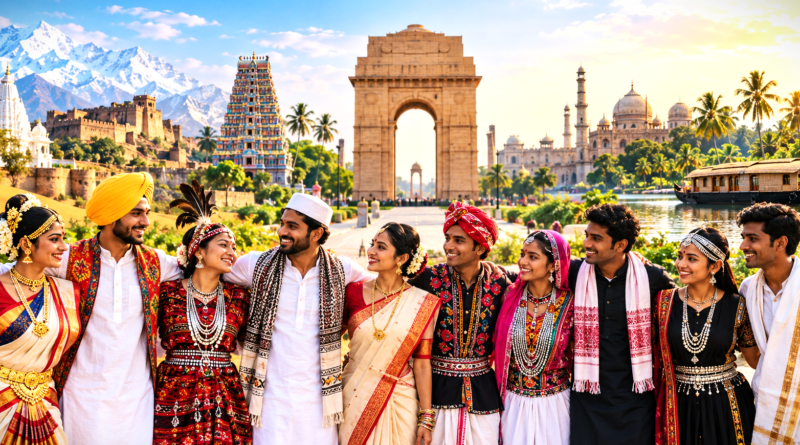
Unity in Diversity: Understanding India’s Cultural Identity – India Times Group
Introduction
India is a country where countless traditions, languages, religions, festivals, cuisines, and artistic expressions exist side by side. From the snow-covered Himalayas in the north to the coastal landscapes of the south, and from the deserts of Rajasthan to the green valleys of the northeast, every region contributes something distinctive to the nation’s identity. Despite these differences, Indians share a collective sense of belonging that connects communities across geographical, linguistic, and cultural boundaries. This remarkable coexistence is widely described as unity in diversity.
India’s cultural identity has developed over thousands of years through migration, trade, philosophical traditions, social interactions, and historical transformations. Different communities have preserved their customs while also adopting practices from their neighbours. As a result, Indian culture is neither completely uniform nor permanently fixed. It is a living combination of inherited traditions and changing social experiences.
Understanding unity in diversity requires looking beyond the visible differences between communities. It involves recognising the values, relationships, shared experiences, and mutual responsibilities that allow people with different backgrounds to participate in a common national life. This principle remains important for understanding India’s past, interpreting its present, and shaping its future.
The Historical Foundations of India’s Cultural Diversity
India’s cultural diversity has deep historical roots. The subcontinent has witnessed the growth of ancient settlements, powerful kingdoms, trading centres, religious movements, and intellectual traditions. Each period contributed new ideas, customs, technologies, and artistic forms to the cultural landscape.
Ancient Indian societies developed distinctive approaches to philosophy, mathematics, literature, medicine, architecture, and spiritual thought. Over time, different regions established their own languages, political traditions, and artistic identities. Coastal communities maintained connections with overseas traders, while inland centres developed networks connecting markets, pilgrimage sites, and educational institutions.
The arrival and settlement of different communities also influenced India’s cultural development. Traders, travellers, scholars, artisans, and migrants introduced new foods, musical traditions, architectural techniques, and ideas. These influences did not simply replace existing practices. In many places, they interacted with local customs and produced new cultural expressions.
Medieval India witnessed significant exchanges among regional kingdoms, devotional movements, Sufi traditions, and diverse artistic communities. These interactions contributed to developments in music, poetry, textiles, architecture, and everyday social life. Later historical periods brought further transformations in education, administration, communication, and public institutions.
The result is a cultural heritage shaped by continuity as well as change. India’s identity cannot be explained through one historical period or a single cultural tradition. It emerges from the accumulated experiences of numerous communities whose contributions have become part of the country’s wider story.
Languages: Different Voices, One Nation
Language is one of the clearest expressions of India’s diversity. People communicate through hundreds of languages and numerous dialects, each carrying distinctive forms of knowledge, humour, literature, memory, and emotion. Hindi, Bengali, Tamil, Telugu, Marathi, Gujarati, Punjabi, Malayalam, Kannada, Assamese, Odia, Urdu, and many other languages contribute to this rich linguistic environment.
Every language offers a particular way of understanding the world. Regional expressions often preserve local histories, agricultural knowledge, traditional stories, and relationships with the natural environment. Folk songs and oral narratives pass cultural memories from older generations to younger ones, sometimes preserving experiences that may not appear in written historical accounts.
India’s literary traditions demonstrate how language can strengthen both regional identity and broader cultural connections. Poems, novels, epics, plays, and devotional compositions explore themes such as family, justice, love, sacrifice, spirituality, and social responsibility. Although the languages differ, many of their central concerns are widely understood across communities.
Multilingualism also creates opportunities for cultural exchange. People who learn additional languages can communicate with neighbours, participate in different traditions, and appreciate literature beyond their mother tongue. Translation, cinema, education, and digital media further connect linguistic communities.
Respecting linguistic diversity does not require every citizen to speak the same language. Instead, it requires recognising the dignity of different languages and ensuring that linguistic differences do not become reasons for exclusion. India’s cultural unity becomes stronger when people can preserve their mother tongues while communicating across regional boundaries.
Religious Diversity and the Spirit of Coexistence
Religion has played an influential role in shaping India’s cultural identity. Hinduism, Islam, Christianity, Sikhism, Buddhism, Jainism, and numerous indigenous and local spiritual traditions are practised across the country. These traditions differ in their beliefs, rituals, sacred texts, and forms of worship, yet they have all contributed to India’s social and cultural history.
Religious diversity is visible in the country’s landscape. Temples, mosques, churches, gurudwaras, monasteries, and other sacred spaces serve as places of worship, community gathering, charitable activity, and cultural learning. Their architecture and artistic features reflect the creativity of the communities that built and maintained them.
The history of Indian spirituality also includes traditions that emphasise compassion, service, non-violence, humility, and the search for truth. Bhakti poets expressed devotion through regional languages, while Sufi teachers often communicated spiritual ideas through poetry, music, and personal relationships. Jain teachings have highlighted non-violence, and Buddhist traditions have contributed influential ideas about compassion and human suffering. Sikh institutions have developed strong traditions of community service, including the practice of serving meals to people regardless of their background.
These examples do not mean that religious communities have always lived without conflict. Indian history, like the history of other societies, includes periods of tension, discrimination, and violence. Recognising this complexity is essential to understanding the real meaning of coexistence.
Religious harmony depends on more than celebrating different festivals. It requires freedom of belief, equal treatment, respectful dialogue, and protection against discrimination. When people can practise their faith without denying the rights of others, religious diversity becomes a source of cultural strength rather than division.
Festivals: Celebrations That Bring Communities Together
Festivals provide some of the most visible examples of India’s cultural richness. Throughout the year, communities celebrate occasions associated with harvests, religious beliefs, seasonal changes, historical memories, and family traditions.
Diwali illuminates homes and public spaces with lamps and decorations. Eid brings families and communities together through prayers, greetings, and shared meals. Christmas is celebrated through church services, music, decorations, and gatherings. Gurpurabs honour important events in Sikh history, while Buddha Purnima and Mahavir Jayanti commemorate influential spiritual figures. Onam, Pongal, Bihu, Lohri, Durga Puja, Ganesh Chaturthi, and numerous regional festivals reflect the agricultural, religious, and historical experiences of different communities.
The celebrations may differ in their meanings and rituals, but many encourage generosity, hospitality, gratitude, and social connection. Families prepare special dishes, children participate in activities, artisans create decorations, and local businesses supply festival-related goods.
Festivals can also encourage interaction beyond religious boundaries. Neighbours exchange sweets, colleagues offer greetings, and friends participate in one another’s celebrations. Such gestures help transform abstract ideas of national unity into everyday experiences of friendship and mutual respect.
However, meaningful participation should remain voluntary and respectful. No community should feel pressured to abandon its customs or participate in unfamiliar religious practices. Unity becomes genuine when people can celebrate their own traditions while appreciating those of others.
Food: A Culinary Map of India’s Identity
Indian cuisine demonstrates how geography, history, climate, agriculture, and cultural exchange influence everyday life. Food varies considerably across the country, yet it remains a powerful way for people to express hospitality and preserve family traditions.
Northern India is known for dishes such as parathas, rajma, chole, and various breads. Southern regions offer preparations based on rice, lentils, coconut, tamarind, and regional spices. Eastern India has distinctive rice dishes, fish preparations, sweets, and fermented foods, while western India features a wide variety of vegetarian meals, seafood, millet-based dishes, and regional snacks. The northeastern states contribute their own traditions involving local vegetables, rice, herbs, fermented ingredients, and meat preparations.
These differences reflect the resources available in each region. Communities living near rivers, forests, mountains, or coastlines developed food practices suited to their surroundings. Religious beliefs, trade, migration, and historical contact introduced additional ingredients and cooking techniques.
Food also connects generations. Family recipes are passed from grandparents to children, preserving memories of festivals, celebrations, and ordinary meals. A particular dish may remind someone of their hometown even after they have moved thousands of kilometres away.
Migration has further expanded India’s culinary landscape. Students, workers, and families moving between states introduce their preferred foods to new communities. Restaurants, markets, and home kitchens become places where people discover unfamiliar flavours.
India’s food culture illustrates an important principle: cultural identity does not depend on everyone eating the same meal. Instead, different culinary traditions enrich a shared social environment.
Traditional Arts, Music, Dance, and Handicrafts
Artistic expression provides another important connection between cultural heritage and national identity. India’s traditional arts reflect the creativity of communities that have developed distinctive methods of storytelling, decoration, performance, and craftsmanship.
Classical dance forms such as Bharatanatyam, Kathak, Kathakali, Odissi, Kuchipudi, Manipuri, Mohiniyattam, and Sattriya preserve different combinations of movement, music, gesture, costume, and narrative. Their techniques vary, but they demonstrate the importance of disciplined practice and artistic transmission across generations.
Folk dances and musical traditions reflect regional celebrations, agricultural cycles, community histories, and local beliefs. Garba, Bhangra, Ghoomar, Bihu dance, and numerous other performances bring communities together through rhythm and movement. Indian classical music traditions, including Hindustani and Carnatic music, offer different approaches to melody, improvisation, and musical expression.
Traditional painting and handicrafts further illustrate regional diversity. Madhubani paintings, Warli art, Pattachitra, Pichwai, miniature painting, and many other styles preserve distinctive visual languages. Handloom weaving, pottery, wood carving, metalwork, embroidery, and jewellery-making represent generations of accumulated skill.
These art forms are more than decorative objects or performances. They can communicate historical memories, social values, religious narratives, and relationships with the natural world. Many also support the livelihoods of artisans and performers.
Protecting traditional arts requires practical support, including access to markets, fair payment, training opportunities, and documentation of endangered techniques. Cultural heritage remains alive when artists can continue practising their crafts while adapting to contemporary audiences.
Clothing and Regional Identity
Clothing in India reflects climate, occupation, cultural traditions, personal preferences, and social occasions. Sarees, salwar suits, kurtas, dhotis, turbans, mekhela chadors, phirans, and numerous regional garments demonstrate the variety of Indian dress.
Textiles also reveal the relationship between culture and geography. Different communities have developed weaving methods, embroidery styles, dyeing techniques, and patterns associated with local materials and artistic traditions. Banarasi silk, Kanchipuram silk, Pashmina weaving, Bandhani textiles, and regional cotton fabrics represent distinctive forms of craftsmanship.
Modern Indian clothing frequently combines traditional and contemporary elements. People may wear regional garments for festivals, choose professional clothing for work, and adopt global fashion trends in everyday life. Such changes do not necessarily weaken cultural identity. They demonstrate that traditions can remain meaningful while responding to new circumstances.
Clothing should not be used to judge someone’s loyalty, character, or place in society. Respecting different choices allows individuals to express their identities without facing unnecessary pressure to conform.
Democracy, Citizenship, and Shared National Identity
Cultural unity becomes especially meaningful when it is connected to equal citizenship. India brings together people with different languages, religions, customs, economic circumstances, and regional experiences under a common constitutional framework.
Democratic participation allows citizens to express their views, elect representatives, raise concerns, and contribute to public life. Constitutional principles, including equality before the law, freedom of religion, and the protection of cultural and educational rights, provide an important foundation for managing diversity.
National symbols, public institutions, sporting achievements, scientific progress, and shared historical experiences can create a sense of collective belonging. Independence Day and Republic Day, for example, provide occasions to reflect on the country’s political journey and the responsibilities of citizenship.
Yet national unity should not require the disappearance of regional identities. A person can feel a strong attachment to a village, language, state, or religious community while also identifying as Indian. These identities can coexist rather than compete.
The strength of a diverse democracy depends on whether people believe they are treated fairly and have meaningful opportunities to participate. When communities experience exclusion or discrimination, trust weakens. When institutions protect rights and encourage equal participation, people have stronger reasons to invest in a common future.
The Role of Education and Young People
Education plays a significant role in helping future generations understand India’s cultural diversity. Schools and colleges can introduce students to regional histories, literature, art, music, and the contributions of different communities. Such learning encourages curiosity and challenges simplistic assumptions about people from unfamiliar backgrounds.
Young people increasingly interact through digital platforms, universities, workplaces, sports, travel, and creative projects. These experiences can help them build friendships beyond familiar linguistic and regional groups. Shared activities often reveal that people with different backgrounds face similar hopes, responsibilities, and everyday challenges.
At the same time, digital platforms can spread stereotypes, misinformation, and hostile messages. Students therefore need the ability to evaluate information, distinguish evidence from rumours, and engage respectfully with disagreement.
Educational institutions can strengthen unity by encouraging group projects, cultural exchanges, language learning, community service, and discussions about constitutional values. These activities help students understand that diversity is not merely something to memorise for examinations. It is a reality that requires cooperation and responsible behaviour.
Families also have an important role. Children who learn to respect domestic workers, neighbours, classmates, and people from unfamiliar communities are more likely to carry those attitudes into adulthood.
Challenges to Unity in Diversity
Despite its cultural strengths, India continues to face challenges that can weaken social harmony. Religious prejudice, caste discrimination, linguistic hostility, regional stereotyping, economic inequality, and gender-based exclusion can prevent people from enjoying equal opportunities.
Political disagreements may also become dangerous when communities are portrayed as enemies or when misinformation encourages suspicion. Social media can amplify these problems by spreading misleading claims rapidly, sometimes before facts can be established.
Another challenge is the gradual loss of certain traditional practices. Smaller languages may lose speakers, artisans may struggle to earn a stable income, and younger generations may have fewer opportunities to learn traditional skills. Urbanisation and changing employment patterns can weaken community institutions that once transmitted cultural knowledge.
Addressing these issues requires more than symbolic celebrations. Governments must implement laws fairly, educational institutions must encourage inclusion, media organisations must report responsibly, and communities must reject discrimination. Citizens can contribute by checking information before sharing it, listening to different perspectives, and treating others with dignity.
Cultural preservation should also avoid turning traditions into rigid rules. Some customs may need to change when they conflict with equality, safety, or individual freedom. Protecting heritage is most valuable when it preserves creativity and knowledge without denying people their rights.
Conclusion
Unity in diversity is one of the most important ways to understand India’s cultural identity. The country’s languages, religions, festivals, cuisines, clothing, artistic traditions, and regional histories demonstrate that there is no single experience that fully represents every Indian. Instead, the national identity has developed through the interaction of countless communities, each contributing distinctive experiences to a broader cultural landscape.
This unity is not automatic, nor does it mean that disagreements and inequalities have disappeared. It requires continuous effort to protect equal rights, encourage mutual understanding, preserve cultural heritage, and ensure that differences do not become excuses for discrimination.
Every citizen can contribute to this effort through small but meaningful actions: learning about another region, respecting different languages, supporting traditional artists, questioning stereotypes, and treating people fairly regardless of their background.
India’s cultural strength lies not in making everyone identical but in creating space for different identities to coexist with dignity. When diversity is respected and shared responsibilities are taken seriously, cultural differences become opportunities for learning, creativity, and cooperation. Unity in diversity is therefore not merely a description of India; it is an ongoing commitment to building a more inclusive, peaceful, and confident society.