
Lung Cancer: Risk Factors, Diagnostic Tests, and Treatment – India Times Group
Introduction
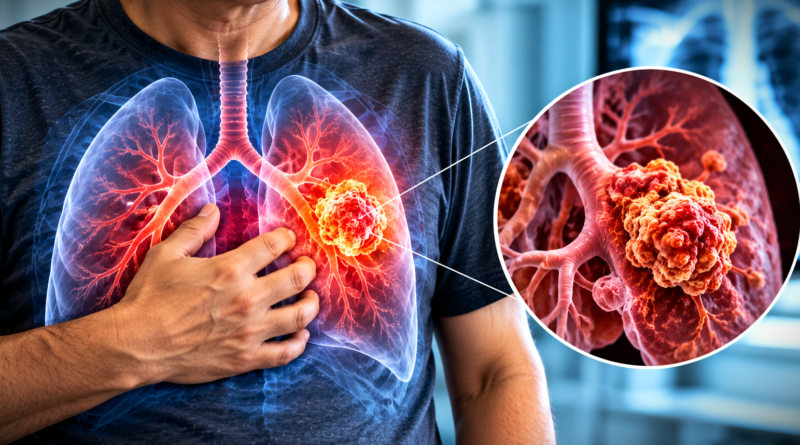
Lung cancer is a serious medical condition that develops when abnormal cells in the lungs begin growing uncontrollably. These cells can form tumors, interfere with normal breathing, and sometimes spread to other parts of the body. Although lung cancer is often associated with smoking, it can also affect people who have never smoked. Understanding its risk factors, recognizing possible warning signs, and learning about available diagnostic tests and treatments can help people make informed decisions about their health.
The lungs are essential organs responsible for exchanging oxygen and carbon dioxide. When cancer develops in lung tissue, it may gradually affect this vital function. Some people experience persistent coughing, chest discomfort, breathlessness, or unexplained fatigue, while others have few noticeable symptoms during the early stages.
Medical advances have improved the ability to identify lung cancer, determine its type, and select treatments according to individual needs. Diagnostic imaging, laboratory investigations, tissue sampling, targeted medicines, immunotherapy, surgery, and radiation therapy all contribute to modern lung cancer care.
Early medical evaluation is particularly important because treatment options and outcomes depend on several factors, including the cancer’s stage, its biological characteristics, the patient’s overall health, and how the disease responds to treatment.
Understanding Lung Cancer
Lung cancer begins when changes in the genetic material of lung cells interfere with the normal processes controlling cell growth and division. Instead of developing, functioning, and dying in an orderly manner, abnormal cells continue multiplying and may form a tumor.
As a tumor grows, it can obstruct airways, damage nearby tissues, or interfere with oxygen exchange. Cancer cells may also enter lymphatic vessels or the bloodstream and travel to distant organs, a process known as metastasis.
Lung cancer is generally divided into two major categories: non-small cell lung cancer and small cell lung cancer.
Non-small cell lung cancer (NSCLC) is the most common category. It includes adenocarcinoma, squamous cell carcinoma, and large cell carcinoma. These cancers differ in their appearance, location, and biological behavior. Adenocarcinoma often develops in the outer regions of the lungs, while squamous cell carcinoma is more commonly associated with the larger airways.
Small cell lung cancer (SCLC) is generally characterized by rapid growth and an increased tendency to spread early. It is strongly associated with tobacco smoking and is commonly treated with systemic therapies rather than surgery alone.
Distinguishing between these types is essential because treatment decisions depend heavily on the specific cancer diagnosis.
Major Risk Factors for Lung Cancer
Lung cancer develops through a combination of environmental exposures, genetic changes, and individual circumstances. Some risk factors can be reduced, while others cannot be controlled.
1. Tobacco Smoking
Cigarette smoking is the leading risk factor for lung cancer. Tobacco smoke contains numerous chemicals capable of damaging the DNA inside lung cells. Repeated exposure allows genetic changes to accumulate, increasing the likelihood of abnormal cell growth.
The risk generally increases with the number of cigarettes smoked, the duration of smoking, and the age at which smoking began. However, there is no completely safe level of tobacco smoking.
Quitting smoking reduces future health risks and provides benefits even after many years of tobacco use. People who have never smoked should avoid starting, while those who currently smoke can seek professional support to stop.
2. Secondhand Smoke
Exposure to smoke produced by other people’s cigarettes, cigars, or similar tobacco products can also increase lung cancer risk. This is known as secondhand smoke exposure.
People may encounter it at home, in workplaces, or in other environments where smoking occurs. Children and adults who live with smokers may experience repeated exposure over long periods.
Smoke-free homes, public spaces, and workplaces help protect nonsmokers from avoidable exposure. Reducing secondhand smoke is an important public health measure.
3. Air Pollution
Air pollution is another recognized risk factor for lung cancer. Outdoor pollutants from vehicles, industrial activities, fuel combustion, and other sources can contain harmful particles and chemicals.
Fine particulate matter can penetrate deep into the respiratory system, contributing to inflammation and cellular damage. Long-term exposure to polluted air can increase lung cancer risk, including among people who have never smoked.
Indoor air quality also matters. Smoke from certain cooking fuels, poor ventilation, and exposure to combustion products may contribute to respiratory harm.
Reducing pollution requires both individual precautions and broader measures, including cleaner energy, improved ventilation, and effective environmental standards.
4. Occupational Exposure
Some workplaces expose employees to substances associated with lung cancer. These include asbestos, arsenic, certain industrial chemicals, diesel exhaust, and radon in particular occupational settings.
Risk depends on the substance, the concentration, the duration of exposure, and whether protective measures are used. Workers in mining, construction, manufacturing, and selected industrial occupations may face specific hazards.
Appropriate ventilation, protective equipment, workplace monitoring, and adherence to safety regulations can reduce exposure. People concerned about previous occupational contact should discuss their history with a healthcare professional.
5. Radon Exposure
Radon is a naturally occurring radioactive gas produced by the breakdown of certain elements in soil and rock. It can enter buildings through foundations and accumulate indoors when ventilation is inadequate.
Long-term exposure to elevated radon levels increases lung cancer risk. The risk is particularly concerning for people who also smoke.
Because radon cannot be reliably detected through sight or smell, testing is necessary to determine whether indoor levels are elevated. Appropriate mitigation can reduce exposure when high concentrations are identified.
6. Family History and Previous Lung Disease
A family history of lung cancer may indicate an increased risk, partly because relatives can share genetic characteristics and environmental exposures. However, having an affected family member does not mean that another person will necessarily develop the disease.
Certain previous lung conditions and a history of radiation exposure to the chest may also influence risk in some circumstances.
People with concerns about their personal or family history should discuss them with a qualified clinician, who can assess individual risk and determine whether further evaluation is appropriate.
Symptoms and Warning Signs
Lung cancer symptoms vary according to the tumor’s location, size, and stage. Some symptoms resemble those caused by infections or other respiratory conditions, so their presence does not automatically indicate cancer.
Common warning signs include:
-
A persistent cough or a noticeable change in an existing cough.
-
Coughing up blood, even in small amounts.
-
Shortness of breath or increasing difficulty breathing.
-
Chest pain that may worsen with coughing or deep breathing.
-
Repeated respiratory infections, such as bronchitis or pneumonia.
-
Unexplained fatigue or reduced energy.
-
Unintentional weight loss or reduced appetite.
-
Persistent hoarseness or unexplained voice changes.
In advanced disease, symptoms may occur when cancer spreads beyond the lungs. These can include bone pain, headaches, or other neurological changes, depending on the affected area.
Anyone experiencing coughing up blood, significant breathing difficulty, or severe chest pain should seek urgent medical assessment. Persistent or worsening respiratory symptoms also deserve evaluation, particularly when risk factors are present.
Diagnostic Tests for Lung Cancer
Diagnosing lung cancer involves several steps. Doctors aim to determine whether cancer is present, identify its type, establish how far it has spread, and gather information needed to choose suitable treatment.
1. Medical History and Physical Examination
The evaluation generally begins with questions about symptoms, smoking history, occupational exposure, family history, and previous medical conditions.
A physical examination may include listening to the lungs, checking breathing patterns, and assessing other signs that could indicate an underlying problem.
Although this initial assessment helps guide further investigations, a physical examination alone cannot confirm or exclude lung cancer.
2. Chest X-Ray
A chest X-ray can reveal an abnormal mass, an area of inflammation, fluid around the lungs, or other changes that require further investigation.
However, small tumors may not be visible, and some abnormalities can resemble infections or noncancerous conditions. A normal X-ray does not always rule out lung cancer when symptoms or risk factors remain concerning.
Doctors may recommend additional imaging when the initial findings are uncertain.
3. Computed Tomography Scan
A computed tomography (CT) scan produces detailed images of the chest using X-rays and computer processing. It can reveal the size, location, and appearance of suspicious lung abnormalities.
CT imaging also helps evaluate nearby lymph nodes and surrounding structures. In selected high-risk individuals without symptoms, low-dose CT screening can identify lung cancer at an earlier stage.
Screening is not appropriate for everyone. Eligibility depends on factors such as age and smoking history, and the potential benefits must be balanced against false-positive findings and other limitations.
4. Biopsy and Tissue Examination
A biopsy involves obtaining a sample of suspicious tissue for examination under a microscope. It is often essential for confirming lung cancer and determining its specific type.
Depending on the location of the abnormality, doctors may use bronchoscopy, a needle biopsy guided by imaging, or a surgical procedure.
Bronchoscopy involves passing a thin instrument through the nose or mouth into the airways to inspect the lungs and collect samples. Needle biopsies may be used for tumors located closer to the outer lung regions.
The collected tissue is examined by pathology specialists. Additional laboratory tests may identify molecular changes that influence treatment selection.
5. PET-CT and Other Imaging Tests
Positron emission tomography combined with CT, known as PET-CT, can help identify areas of increased metabolic activity and evaluate possible cancer spread.
Magnetic resonance imaging may be used to examine the brain or other areas when clinically indicated. Additional scans can assess the liver, bones, or other organs depending on the suspected stage.
These tests help establish the extent of disease, but imaging findings must be interpreted alongside clinical information and, when needed, tissue results.
6. Molecular and Laboratory Testing
Some lung cancers contain genetic alterations that allow specific medicines to target abnormal cell activity. Molecular testing may identify changes involving genes such as EGFR, ALK, ROS1, or other clinically relevant markers.
Testing for protein expression, including PD-L1 in appropriate cases, can also help doctors assess whether immunotherapy may be useful.
Blood tests may evaluate general health, kidney and liver function, and the body’s ability to tolerate treatment. Blood tests alone generally cannot establish a definitive lung cancer diagnosis.
Treatment Options for Lung Cancer
Treatment depends on the cancer type, stage, molecular characteristics, symptoms, and the patient’s preferences and overall health. Many people receive a combination of treatments.
1. Surgery
Surgery may be recommended for selected patients with localized non-small cell lung cancer when the tumor can be removed safely.
Procedures may involve removing a small portion of lung tissue, an entire lung lobe, or, in selected cases, a larger portion of the lung. Nearby lymph nodes may also be examined to determine whether cancer has spread.
The choice of operation depends on tumor location, lung function, and other medical considerations. Surgery is generally less suitable for widespread disease, although individual circumstances differ.
2. Radiation Therapy
Radiation therapy uses carefully directed high-energy radiation to destroy cancer cells or prevent them from multiplying.
It may be used when surgery is not appropriate, to treat certain localized tumors, or alongside other treatments. Radiation can also help relieve symptoms caused by tumors affecting the chest, bones, or other areas.
Modern techniques aim to deliver radiation to the intended target while limiting damage to surrounding healthy tissue.
3. Chemotherapy
Chemotherapy uses medicines that damage or destroy rapidly dividing cancer cells. It may be administered before surgery, after surgery, alongside radiation, or as a primary treatment for advanced disease.
The choice of medicines depends on the cancer type and treatment objectives. Possible side effects include fatigue, nausea, changes in blood cell counts, and hair loss, although experiences vary by medication.
Supportive care can help manage side effects and maintain quality of life during treatment.
4. Targeted Therapy
Targeted therapy uses medicines designed to interfere with particular molecular changes that help cancer cells grow.
These treatments can be highly effective for some tumors with specific genetic alterations. However, they are useful only when the relevant target is present, making molecular testing important.
Side effects vary according to the medicine and may include skin changes, digestive problems, or effects on particular organs. Doctors monitor patients to assess effectiveness and identify complications.
5. Immunotherapy
Immunotherapy helps the immune system recognize or attack cancer cells. Certain medicines work by blocking proteins that cancer uses to avoid immune detection.
Immunotherapy is used in selected cases of non-small cell lung cancer and small cell lung cancer, depending on disease characteristics and treatment plans.
These medicines can produce lasting responses in some patients, but they do not work for everyone. They may also cause immune-related side effects that affect the lungs, liver, intestines, skin, or other organs.
Prompt medical attention is important when new symptoms develop during treatment.
6. Palliative and Supportive Care
Palliative care focuses on relieving symptoms, reducing distress, and improving quality of life. It can be provided alongside cancer-directed treatment at different stages of illness.
Support may include pain management, assistance with breathing difficulties, nutritional guidance, psychological counseling, and help with treatment-related symptoms.
For advanced cancer, supportive care remains important regardless of whether the person is receiving chemotherapy, immunotherapy, targeted treatment, or other interventions.
Prevention and Early Detection
Not every case of lung cancer can be prevented, but reducing exposure to known risk factors can lower risk.
Avoiding tobacco, stopping smoking, limiting secondhand smoke exposure, reducing occupational hazards, and testing buildings for radon where appropriate are valuable preventive measures. Improving indoor and outdoor air quality can also benefit respiratory health.
People who meet established high-risk screening criteria should discuss low-dose CT screening with a healthcare professional. Screening is intended for eligible people without symptoms; anyone who already has concerning symptoms needs diagnostic evaluation instead.
Maintaining general health through physical activity, nutritious food, and appropriate medical care can support well-being, although these habits cannot eliminate lung cancer risk.
Conclusion
Lung cancer is a complex disease influenced by smoking, environmental exposures, occupational hazards, genetic factors, and other circumstances. Understanding its warning signs and risk factors can encourage timely medical evaluation and informed prevention.
Modern diagnostic methods, including CT scans, biopsies, molecular testing, and specialized imaging, help doctors identify cancer and determine its extent. Treatment may involve surgery, radiation therapy, chemotherapy, targeted medicines, immunotherapy, or a combination of approaches.
Although lung cancer remains a serious condition, treatment decisions are increasingly guided by the biological characteristics of each tumor and the needs of each patient. Early diagnosis can improve the opportunity to use effective treatments, while supportive care helps protect comfort and quality of life throughout the disease journey.
The most important steps are to reduce avoidable risks, take persistent symptoms seriously, follow appropriate screening recommendations, and seek qualified medical guidance whenever concerns arise.