
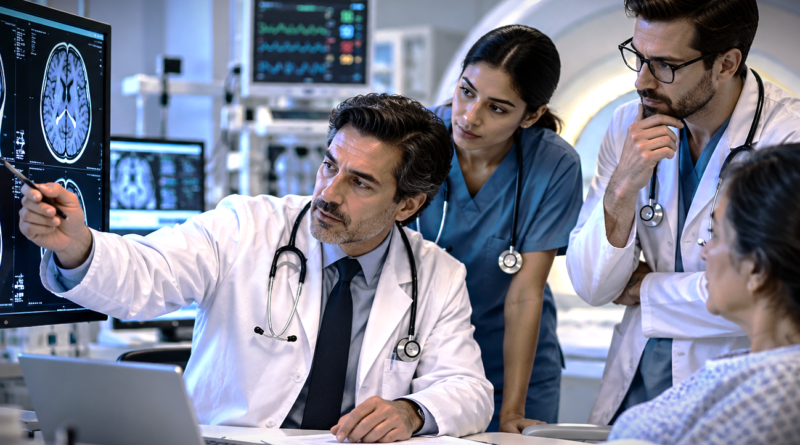
How Doctors Diagnose Complex Medical Conditions – India Times Group
Understanding the Science, Technology, and Clinical Reasoning Behind Accurate Medical Diagnosis
Introduction
Diagnosing a medical condition is one of the most important responsibilities in modern healthcare. While some illnesses can be identified through familiar symptoms and straightforward examinations, others present challenges that require extensive investigation, careful observation, and advanced medical knowledge. Complex medical conditions may affect several organs simultaneously, produce symptoms that resemble unrelated diseases, or develop gradually without clear warning signs. In such situations, reaching an accurate diagnosis becomes a detailed process rather than a single medical decision.
Doctors combine scientific knowledge, clinical experience, laboratory investigations, imaging technologies, and information provided by patients to understand what may be happening inside the body. They must distinguish between possible explanations, evaluate conflicting findings, and determine which tests are genuinely necessary. Sometimes, the diagnosis emerges quickly. In other cases, it develops through repeated consultations, additional investigations, and collaboration among specialists.
Modern medicine has transformed this process by introducing sophisticated diagnostic tools, digital health records, genetic testing, and artificial intelligence. Nevertheless, technology alone cannot replace careful clinical judgment. Understanding the patient as an individual remains central to identifying complicated diseases and choosing appropriate treatment.
Understanding What Makes a Medical Condition Complex
A medical condition becomes difficult to diagnose when its signs and symptoms do not point clearly toward one explanation. Several diseases can produce similar complaints, making it challenging to determine which condition is responsible.
For example, persistent tiredness may be associated with anemia, thyroid disorders, nutritional deficiencies, infections, sleep disturbances, or other medical problems. Likewise, recurring abdominal discomfort can originate from digestive disorders, inflammation, urinary conditions, or problems involving other organs. The symptom itself provides useful information, but it does not necessarily reveal the underlying cause.
Some conditions also produce different symptoms in different individuals. Age, genetics, existing illnesses, medications, lifestyle, and environmental influences can change how a disease develops. Patients with the same underlying disorder may therefore experience very different symptoms.
Another challenge arises when several medical conditions exist together. A person might have diabetes, cardiovascular disease, and a kidney disorder at the same time. Symptoms caused by one condition may overlap with those of another, while treatments for one illness may influence the others.
Doctors must also consider uncommon diseases without immediately overlooking more familiar explanations. The challenge is to investigate possibilities systematically, avoid premature conclusions, and use available evidence to reach the most reasonable diagnosis.
The Patient Interview: Where Diagnosis Begins
Although modern hospitals possess advanced scanning machines and sophisticated laboratory equipment, diagnosis often begins with a conversation. The patient’s medical history provides essential clues about the origin, duration, and development of symptoms.
Doctors ask when the symptoms first appeared, whether they occur continuously or intermittently, and whether particular activities make them better or worse. They may inquire about recent infections, previous surgeries, medications, allergies, family medical history, occupation, travel, and everyday habits.
Small details can sometimes change the direction of an investigation. A patient experiencing recurring breathing difficulties might mention that symptoms become worse during a particular season or after exposure to dust. Another person with unexplained digestive complaints might describe a consistent relationship between discomfort and certain foods.
Doctors also distinguish between the patient’s main complaint and accompanying symptoms. Changes in appetite, sleep, energy, body temperature, or physical functioning may help connect seemingly unrelated problems.
Listening carefully is particularly important when symptoms are difficult to describe. Patients may use different words for similar sensations, and some may struggle to explain when their condition began. Asking clear follow-up questions helps doctors build a more complete picture.
A detailed medical history does not establish every diagnosis, but it helps determine which explanations deserve closer attention and which investigations are likely to provide useful information.
Physical Examination and Clinical Observation
Following the patient interview, doctors conduct a physical examination based on the symptoms and suspected conditions. This allows them to identify physical signs that may support or challenge an initial explanation.
The examination may include checking blood pressure, pulse, breathing rate, temperature, and oxygen levels. Depending on the complaint, a doctor might examine the heart, lungs, abdomen, skin, joints, reflexes, or nervous system.
Physical findings can provide important clues. Swelling may suggest fluid accumulation or inflammation, while certain patterns of skin changes may be associated with hormonal, infectious, or immune-related disorders. Changes in reflexes, muscle strength, or coordination may help identify possible neurological problems.
However, physical examinations have limitations. Some serious illnesses produce few noticeable signs during their early stages. Other conditions fluctuate, meaning that symptoms may be absent during a particular appointment.
For this reason, doctors interpret examination findings alongside the patient’s history and other available evidence. A normal examination does not always rule out disease, just as an unusual finding does not automatically establish a specific diagnosis.
Laboratory Tests and the Search for Hidden Clues
Laboratory investigations help doctors examine processes that cannot be assessed through conversation or physical examination alone. Blood, urine, and other samples can reveal changes associated with infections, inflammation, organ dysfunction, hormonal imbalances, and nutritional deficiencies.
A complete blood count, for instance, can provide information about red blood cells, white blood cells, and platelets. Kidney and liver function tests help assess how effectively these organs are working. Hormone measurements may assist in investigating suspected endocrine disorders, while selected immune markers can support the evaluation of certain autoimmune diseases.
Doctors do not usually order every available test. Instead, they select investigations according to the patient’s symptoms, medical history, examination findings, and possible diagnoses.
Interpreting laboratory results requires care. A value outside the usual reference range does not always indicate a serious illness. Results may be influenced by hydration, medications, recent physical activity, temporary infections, or normal biological variation.
Similarly, a result within the reference range cannot exclude every disease. Some conditions produce measurable abnormalities only at particular stages, while others require specialized tests that are not included in routine blood work.
When findings do not match the patient’s symptoms, doctors may repeat a test, request a different investigation, or reconsider their original assumptions. The objective is not simply to collect numbers but to understand what those numbers mean in the patient’s overall clinical situation.
Medical Imaging: Looking Inside the Body
Medical imaging has significantly improved the diagnosis of conditions affecting internal organs, bones, blood vessels, and soft tissues. Different imaging techniques reveal different aspects of the body’s structure and function.
X-rays are commonly used to examine bones and certain chest conditions. Ultrasound uses sound waves to create images of internal structures and can help evaluate organs, blood flow, and developing pregnancies. Computed tomography, commonly known as CT, produces detailed cross-sectional images that may reveal injuries, tumors, bleeding, or other abnormalities.
Magnetic resonance imaging, or MRI, provides detailed images of soft tissues and is particularly useful for evaluating the brain, spinal cord, joints, and certain internal organs. Nuclear medicine techniques can examine aspects of organ function by tracking small amounts of radioactive substances under controlled medical conditions.
Choosing the correct imaging method depends on the clinical question. A scan that provides excellent information about bones may not be the best option for investigating a soft-tissue abnormality. Doctors also consider radiation exposure, contrast materials, patient safety, availability, and cost.
Imaging findings must be interpreted in context. An abnormality visible on a scan may be unrelated to the symptoms, while some diseases may not produce obvious changes during early stages. Radiologists and treating doctors therefore compare images with examination findings and other investigations before reaching conclusions.
Biopsies and Specialized Diagnostic Procedures
Sometimes, blood tests and imaging cannot determine exactly what is causing an abnormality. In these situations, doctors may recommend procedures that examine tissue, measure internal activity, or collect more specific evidence.
A biopsy involves obtaining a small sample of tissue for examination. Pathologists study the sample under a microscope and may use specialized staining or molecular techniques to identify abnormal cells, inflammation, infections, or particular types of tumors.
Endoscopy allows doctors to examine certain internal passages using a flexible instrument equipped with a camera. Depending on the procedure, they may collect samples or perform additional investigations during the examination.
Other specialized procedures include electrical recordings of heart activity, tests of nerve function, and measurements of lung performance. Each method answers a different diagnostic question.
Because these procedures may involve discomfort, cost, or medical risks, doctors weigh their expected benefits against possible disadvantages. The decision depends on whether the information obtained is likely to change the diagnosis, treatment plan, or assessment of risk.
Differential Diagnosis: Comparing Possible Explanations
One of the most demanding parts of diagnosing a complex condition is differential diagnosis. This means identifying and comparing the diseases that could reasonably explain a patient’s symptoms.
Doctors begin with several possible explanations and evaluate how well each fits the available evidence. They consider which findings support a diagnosis, which findings contradict it, and what additional information would help distinguish it from competing possibilities.
For example, chest discomfort might arise from muscular strain, digestive problems, respiratory conditions, or cardiovascular disease. The patient’s age, medical history, symptom pattern, examination, and risk factors help determine which possibilities require urgent attention.
Doctors also consider the consequences of missing a particular disease. A relatively uncommon but dangerous condition may deserve prompt investigation when the symptoms and risk factors make it plausible.
This process requires a balance between avoiding unnecessary tests and ensuring that serious possibilities are not overlooked. Testing every imaginable disease would be impractical and could produce confusing incidental findings. Investigating too narrowly, however, may cause important clues to be missed.
Good diagnostic reasoning remains flexible. When new evidence contradicts an earlier explanation, doctors must be willing to revise their assessment instead of forcing every finding to fit the original theory.
The Role of Medical Specialists
Some conditions involve multiple organs or require knowledge of highly specialized diagnostic techniques. In such cases, doctors may seek assistance from specialists.
A neurologist evaluates disorders of the nervous system, while a cardiologist focuses on the heart and circulation. Endocrinologists investigate hormonal and metabolic conditions, and rheumatologists assess many diseases involving joints, connective tissues, and the immune system.
Complex cases may require collaboration among several specialists, radiologists, pathologists, laboratory professionals, and other healthcare workers. Each contributes a different perspective to the diagnostic process.
Multidisciplinary discussions are particularly useful when test results appear contradictory or when a condition does not fit neatly within one medical specialty. A radiologist may identify an imaging pattern, a pathologist may clarify tissue findings, and the treating physician may connect both observations with the patient’s symptoms.
Effective collaboration also reduces the risk of fragmented care. Doctors need to share relevant findings, communicate uncertainty clearly, and agree on the next steps rather than repeating investigations without a clear purpose.
Artificial Intelligence and the Future of Diagnosis
Artificial intelligence is increasingly influencing how medical information is analyzed. Computer systems can assist in reviewing medical images, identifying patterns in laboratory results, organizing patient records, and highlighting findings that might otherwise receive less attention.
In selected applications, AI tools can help detect subtle abnormalities in radiological images or identify patterns across large collections of medical data. These capabilities may support earlier investigation and help healthcare professionals manage complex information more efficiently.
However, artificial intelligence has important limitations. Its performance depends on the quality and representativeness of the data used to develop and evaluate it. A system that performs well in one hospital or patient population may be less reliable in another setting.
AI-generated suggestions can also contain errors, overlook relevant context, or reflect biases present in the underlying data. Medical decisions therefore require professional oversight, appropriate validation, and careful consideration of the individual patient.
The most useful role for AI is to support clinical reasoning rather than replace it. Doctors remain responsible for interpreting findings, explaining uncertainty, considering patient preferences, and deciding whether a proposed diagnosis makes sense in the complete clinical picture.
When a Diagnosis Remains Uncertain
Despite substantial advances in medicine, some conditions cannot be identified immediately. Symptoms may be too early to produce detectable abnormalities, investigations may be inconclusive, or a disease may have an unusual presentation.
In these circumstances, doctors may adopt a provisional diagnosis and arrange follow-up examinations. They may monitor symptom progression, repeat selected tests, or investigate alternative explanations as new information becomes available.
A diagnosis can become clearer over time because diseases evolve. Findings that were absent during an initial appointment may emerge later, providing additional evidence. This is one reason follow-up care is important when symptoms persist despite reassuring initial results.
Patients can contribute by reporting changes accurately, attending recommended appointments, and maintaining a record of symptoms and relevant medications. They should also feel comfortable asking why a test is needed, what its results mean, and when further evaluation may be appropriate.
Seeking another medical opinion can sometimes help when a diagnosis remains uncertain or the proposed treatment has significant consequences. Such discussions are most productive when previous records, investigation results, and treatment history are available for review.
Uncertainty does not necessarily mean that a doctor has failed. In complicated cases, acknowledging the limits of current evidence can be safer and more scientifically responsible than offering an unsupported conclusion.
Conclusion
Diagnosing complex medical conditions requires a combination of scientific evidence, clinical reasoning, modern technology, and communication. Doctors begin by understanding the patient’s symptoms and medical history, then use physical examinations, laboratory investigations, imaging, and specialized procedures to investigate possible explanations.
The process depends on more than identifying abnormalities. Doctors must determine whether findings are meaningful, compare competing diagnoses, recognize the possibility of multiple illnesses, and reconsider their conclusions when new evidence emerges. Collaboration among specialists and responsible use of artificial intelligence can strengthen this work, while follow-up care helps clarify conditions that cannot be identified immediately.
Ultimately, accurate diagnosis is a process of building and refining an explanation that fits the available evidence. Medical technology continues to expand what doctors can discover, but careful observation, critical thinking, and patient involvement remain indispensable. By combining these elements, healthcare professionals can improve diagnostic accuracy, guide appropriate treatment, and help patients make informed decisions about their health.