
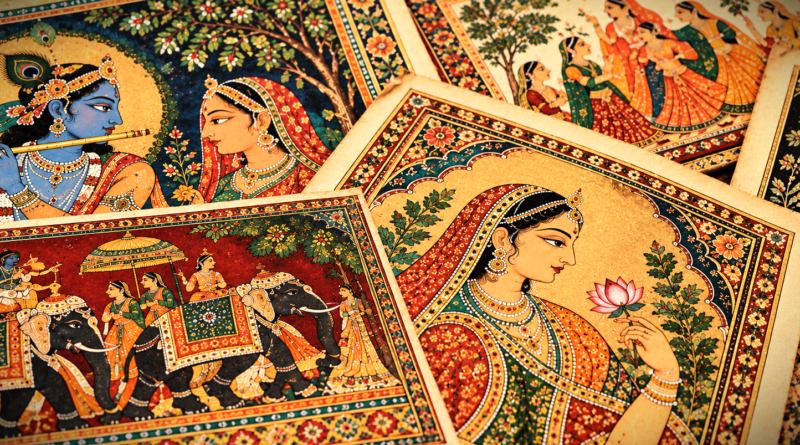
The Origins of Traditional Indian Painting – India Times Group
Exploring the Ancient Roots, Cultural Influences, Religious Traditions, and Artistic Evolution of India’s Rich Painting Heritage
Introduction
Traditional Indian painting is one of the oldest and most diverse artistic traditions in the world. Its origins are deeply connected with the country’s spiritual beliefs, social customs, natural surroundings, royal courts, and everyday experiences. From prehistoric drawings on rock shelters to the elaborate murals of ancient caves and the detailed miniature paintings of royal kingdoms, Indian art has developed through centuries of creativity and cultural exchange.
Painting in India was never limited to decoration. It served as a medium for expressing religious ideas, preserving stories, recording important events, celebrating nature, and communicating emotions. Artists transformed walls, manuscripts, cloth, wooden surfaces, and other materials into visual narratives that reflected the values and imagination of their communities.
The evolution of traditional Indian painting was not a single, uninterrupted journey. Different regions developed their own artistic languages, materials, techniques, and subjects. Some traditions emphasized religious devotion, while others celebrated royal life, landscapes, mythology, or village customs. These styles influenced one another while retaining distinctive regional identities.
Understanding the origins of traditional Indian painting offers a fascinating opportunity to explore how art became an essential part of India’s cultural history. It also reveals how artistic knowledge passed from one generation to another, allowing ancient traditions to survive and inspire contemporary creativity.
1. Prehistoric Rock Art: The Earliest Artistic Expressions
The story of Indian painting begins long before the emergence of organized kingdoms and written records. Prehistoric communities used natural pigments to create images on rock surfaces and the walls of shelters. These paintings provide evidence of early human creativity and the desire to represent experiences visually.
One of the most important examples of prehistoric rock art can be found at the Bhimbetka rock shelters in present-day Madhya Pradesh. The painted surfaces contain figures of animals, people, hunting activities, dancing, and other scenes associated with human life.
Early artists relied on materials available in their environment. Mineral pigments, including red and white substances, helped them produce recognizable shapes and figures. Their methods were simple in comparison with later artistic techniques, but many compositions display a strong understanding of movement and visual storytelling.
These paintings may have served different purposes, including recording activities, expressing shared experiences, or participating in cultural and ceremonial practices. Their exact meanings cannot always be established with certainty.
Nevertheless, prehistoric rock art demonstrates that visual expression was important to human communities from an early period. It established a foundation for later artistic traditions in which images became a means of preserving memory and communicating ideas.
2. The Influence of Religion and Spiritual Beliefs
Religion played a major role in shaping traditional Indian painting. As religious traditions developed, artists increasingly used visual imagery to communicate spiritual teachings, represent sacred figures, and illustrate stories that were familiar to their communities.
Hindu, Buddhist, and Jain traditions each contributed to the development of Indian artistic expression. Their stories, philosophical ideas, and religious symbols provided artists with a wide range of subjects.
Buddhist painting became especially significant through the decoration of monasteries, caves, and religious spaces. Artists represented the Buddha, his previous births, important events from his life, and the lives of people connected with Buddhist teachings.
The paintings at Ajanta in Maharashtra provide a remarkable example of this tradition. Their compositions contain religious figures, royal personalities, musicians, attendants, animals, and scenes reflecting the social world of their time. The artwork demonstrates sophisticated use of line, color, expression, and arrangement.
Hindu traditions encouraged the representation of deities, divine events, and episodes from the Ramayana, Mahabharata, and Puranic literature. Jain painting frequently focused on spiritual teachers, religious narratives, and the lives of revered figures.
Religious artwork helped communicate complex ideas to audiences through recognizable characters, gestures, and symbolic objects. It also connected artistic activity with worship, pilgrimage, education, and community identity.
3. Ancient Indian Murals and the Development of Painting Techniques
Wall painting became an important artistic practice in ancient India. Murals decorated caves, monasteries, temples, and other significant spaces, transforming architectural surfaces into elaborate visual compositions.
Artists had to understand how to prepare surfaces, apply pigments, organize figures, and create compositions that remained visually effective within particular buildings. Their work required considerable technical knowledge and careful planning.
The paintings at Ajanta are among the most celebrated surviving examples of ancient Indian mural art. They reveal an ability to represent human figures with natural movement, expressive faces, detailed clothing, and carefully arranged backgrounds.
Rather than presenting figures as isolated objects, artists often placed them within complex scenes. Groups of people interact through gestures, glances, and movement, creating a sense of narrative continuity.
Colors helped distinguish figures, establish atmosphere, and guide the viewer’s attention. Artists used available mineral and other pigments, although the precise materials and methods varied according to the period and location.
Other important mural traditions developed at sites such as Bagh in Madhya Pradesh and in the cave complexes of western and southern India.
These surviving paintings show that ancient Indian artists possessed sophisticated skills long before the development of many later regional styles. Their achievements created an artistic legacy that continued to influence religious and courtly painting.
4. The Role of Temples in Preserving Artistic Traditions
Temples became important centers for the creation and preservation of Indian art. Their walls, ceilings, pillars, and surrounding structures offered artists opportunities to represent religious stories, divine figures, celestial beings, and symbolic patterns.
Temple painting was closely connected with architecture and religious practice. Artists considered the position of images, the significance of sacred spaces, and the relationship between painted figures and sculptural decoration.
In some traditions, paintings helped devotees recognize particular deities and understand episodes from religious literature. In others, decorative patterns and symbolic imagery contributed to the atmosphere of sacred spaces.
Temple institutions could also support the transmission of artistic knowledge. Experienced artists trained younger practitioners, passing down methods for preparing surfaces, mixing pigments, drawing figures, and organizing compositions.
Different regions developed distinctive approaches. In southern India, religious painting traditions interacted with elaborate temple architecture and local devotional practices. In Kerala, mural painting developed recognizable conventions involving strong outlines, expressive figures, and carefully selected colors.
Temple art also reflected the interests of patrons, including rulers, religious institutions, and local communities. Their support enabled artists to undertake ambitious projects that required considerable time and specialized skills.
Through these religious spaces, painting became part of the cultural life of communities rather than remaining an activity confined to individual artists.
5. The Emergence of Manuscript Painting
As written traditions developed, painting increasingly became associated with illustrated manuscripts. Artists created images on prepared palm leaves, paper, and other writing surfaces, combining visual storytelling with literary and religious texts.
Manuscript painting required a different approach from mural decoration. The available space was smaller, so artists had to communicate important details through compact compositions, clear outlines, and carefully arranged figures.
Buddhist manuscripts, Jain religious texts, and Hindu literary works provided important subjects for illustration. Images helped readers connect written passages with recognizable events and characters.
Jain manuscript painting became particularly influential in western India. Artists often used strong colors, decorative backgrounds, and distinctive facial features to create easily identifiable figures. The illustrations accompanied religious texts and helped preserve the visual conventions of the tradition.
Palm-leaf manuscripts also influenced artistic practices in eastern India and other regions. Their narrow format encouraged artists to adapt figures and scenes to restricted spaces.
The gradual spread of paper created additional possibilities for illustrated books and albums. Paper allowed artists to explore different layouts and produce larger compositions than some earlier manuscript formats permitted.
Manuscript painting helped establish a close relationship between literature and visual art. It preserved stories while allowing artists to interpret them through distinctive regional styles.
6. Regional Diversity: The Foundation of India’s Painting Heritage
India’s geography, languages, religious traditions, and social customs encouraged the development of diverse painting styles. Instead of following a single national pattern, traditional Indian painting evolved through numerous regional traditions.
In eastern India, Pattachitra developed as a distinctive form of painting associated particularly with Odisha. Artists traditionally depicted religious subjects, especially stories connected with Lord Jagannath, using bold outlines, decorative borders, and carefully organized compositions.
In Bihar, Madhubani painting became known for its intricate patterns, vibrant colors, and subjects drawn from mythology, nature, festivals, and domestic life. Traditionally associated with communities and household spaces, the art form developed through practices passed between generations.
Warli painting from Maharashtra developed a distinctive visual language using simple geometric forms, especially circles, triangles, and lines. Its compositions frequently represent farming, dancing, animals, village activities, and relationships between people and their environment.
In Rajasthan, Phad painting emerged as a narrative tradition in which large painted cloths presented stories of local deities and heroic figures. These works were associated with oral performance, allowing images and storytelling to operate together.
Each tradition developed within its own social and cultural environment. Materials, colors, patterns, and subjects reflected local resources and community practices.
Regional diversity became one of the defining strengths of Indian painting. It allowed artistic traditions to remain closely connected with local identities while contributing to a much broader cultural heritage.
7. Royal Courts and the Growth of Miniature Painting
Royal patronage significantly influenced the development of traditional Indian painting. Kings, nobles, and wealthy patrons commissioned artworks to celebrate their achievements, document important events, illustrate literature, and decorate palaces.
Miniature painting developed through several interconnected traditions. Indian artists combined established local practices with influences that arrived through trade, migration, diplomacy, and contact with other artistic cultures.
Rajput painting flourished in various courts across Rajasthan and the Himalayan regions. Its subjects included Hindu mythology, romantic poetry, devotional themes, courtly activities, and landscapes.
Different Rajput schools developed recognizable characteristics. Some emphasized vivid colors and energetic compositions, while others focused on delicate details, emotional expression, and atmospheric landscapes.
Mughal painting introduced another influential courtly tradition. Under Mughal rulers, artists developed detailed representations of emperors, court ceremonies, historical events, plants, animals, and portraits. The tradition combined Persian artistic influences with Indian techniques and subjects.
Artists working in these environments benefited from access to specialized materials, workshops, and opportunities for collaboration. Their paintings often demonstrated remarkable attention to detail.
Courtly painting did not replace religious or folk traditions. Instead, it added another dimension to India’s artistic history, expanding the range of subjects and techniques available to painters.
8. Natural Materials and Traditional Artistic Methods
The development of traditional Indian painting depended heavily on the materials available to artists. Before modern synthetic paints became widespread, painters often prepared colors from minerals, plants, earth, and other natural sources.
Red and yellow ochres, charcoal, and mineral-based pigments provided a range of colors. Certain traditions used plant-derived dyes, while others incorporated white pigments and carefully prepared black colorants.
The availability of particular materials varied by region. Artists developed specialized methods for grinding pigments, mixing them with suitable binding substances, and applying them to walls, cloth, paper, or prepared surfaces.
Brushes could be made from natural fibers or animal hair, depending on local practices and the desired effect. The choice of tools influenced the thickness of lines, the handling of color, and the level of detail possible.
Surface preparation was equally important. Wall painters needed stable surfaces, while manuscript artists required materials that could withstand repeated handling and preserve fine details.
Traditional techniques were often learned through apprenticeship. Younger artists observed experienced practitioners, practiced drawing and color preparation, and gradually mastered the conventions of their particular school.
This knowledge represented an important form of cultural inheritance. Preserving traditional painting therefore means protecting not only finished artworks but also the skills and material knowledge that made them possible.
9. The Influence of Trade, Migration, and Cultural Exchange
Indian painting evolved through both local innovation and contact with other cultures. Traders, travelers, religious teachers, artisans, and political communities helped ideas and artistic techniques move across regions.
Persian artistic traditions influenced several forms of Indian manuscript and court painting, particularly through the development of Mughal workshops. These interactions encouraged artists to explore new approaches to portraiture, composition, color, and landscape.
At the same time, Indian painters adapted outside influences to local tastes and subjects. Imported ideas were transformed through existing religious traditions, regional conventions, and the preferences of patrons.
Trade also helped circulate materials, pigments, paper, and artistic objects. The movement of people created opportunities for artists to encounter unfamiliar techniques and develop new combinations.
Cultural exchange did not make Indian painting less distinctive. Instead, it contributed to its variety and ability to evolve.
The history of traditional Indian painting demonstrates that artistic traditions are rarely isolated. They grow through interaction, adaptation, and the creative decisions of individual communities.
10. Preserving Traditional Indian Painting Today
Traditional Indian painting remains an important part of the country’s cultural identity. However, many traditional practices face challenges related to changing livelihoods, reduced demand for handmade artwork, limited access to markets, and the difficulty of passing specialized skills to younger generations.
Preservation efforts can help address these challenges by supporting artists, documenting traditional techniques, restoring historical murals, and creating opportunities for artistic education.
Museums and cultural institutions play a role in protecting important works and helping audiences understand their historical significance. Workshops, exhibitions, and community initiatives allow traditional painters to share their knowledge with new generations.
Digital platforms have also created opportunities for artists to present their work to wider audiences. Yet the survival of a painting tradition depends on more than visibility. Artists need sustainable ways to earn a living and continue practicing their craft.
Encouraging young people to learn traditional methods can help ensure that artistic knowledge remains active rather than becoming only a subject of historical study.
Traditional painting can also inspire contemporary artists, designers, and illustrators. Its patterns, colors, narrative structures, and symbolic vocabulary offer possibilities for creative experimentation while retaining connections with cultural heritage.
Conclusion
The origins of traditional Indian painting can be traced through a remarkable journey from prehistoric rock art to ancient murals, religious manuscripts, temple decorations, regional folk traditions, and royal miniature paintings. Each stage reflects the changing experiences, beliefs, technologies, and cultural relationships of the communities that produced it.
Religion provided important subjects and purposes, while temples and monasteries supported artistic activity. Manuscripts connected painting with literature, regional traditions expressed local identities, and royal courts encouraged technical experimentation and new forms of visual storytelling.
The use of natural pigments, specialized tools, and apprenticeship-based learning helped preserve artistic knowledge across generations. Meanwhile, trade and cultural exchange introduced new ideas that artists adapted to their own traditions.
Traditional Indian painting is therefore not a single style but a vast collection of interconnected artistic practices. Its importance lies in both its visual beauty and its ability to preserve stories, beliefs, memories, and ways of life.
Protecting this heritage means recognizing the artists and communities who continue to maintain it. Their work ensures that the creative achievements of earlier generations remain meaningful today and continue to inspire future generations.