
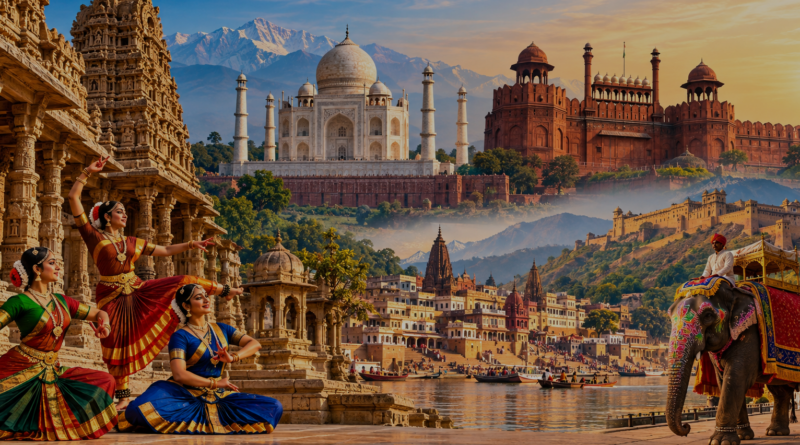
The Rich Cultural Heritage of India: A Journey Through Time – India Times Group
Exploring India’s Ancient Civilizations, Diverse Traditions, Artistic Achievements, and Enduring Cultural Legacy
Introduction
India is a land where history, tradition, spirituality, and creativity come together to form one of the world’s most fascinating cultural landscapes. From ancient civilizations and magnificent monuments to colourful festivals, classical music, traditional crafts, and diverse languages, the country possesses a heritage shaped by thousands of years of human experience. Every region reflects a distinctive identity, yet shared customs, historical connections, and cultural exchanges create a broader sense of belonging.
The cultural heritage of India is not limited to old buildings, archaeological discoveries, or historical records. It also exists in everyday life through family traditions, regional cuisines, folk songs, religious celebrations, traditional clothing, and stories passed from one generation to another. Although Indian society has experienced considerable change, many traditional practices continue to influence modern lifestyles.
Understanding India’s cultural heritage means exploring the civilizations, beliefs, artistic expressions, and social developments that have shaped the nation. It is a journey through time that reveals how the past continues to influence the present while providing inspiration for the future.
1. Ancient Civilizations and the Foundations of Indian Culture
The roots of Indian culture extend deep into antiquity. Early human settlements gradually developed into organized communities with distinctive customs, technologies, and social structures. Among the most remarkable achievements of ancient India was the Indus Valley Civilization, which flourished across parts of the northwestern Indian subcontinent.
Cities such as Harappa and Mohenjo-daro demonstrated impressive urban planning, including carefully arranged streets, drainage systems, residential structures, and organized public spaces. These achievements reveal that ancient communities possessed considerable knowledge of construction, sanitation, trade, and civic organization.
Agriculture supported settled life, while trade connected communities across considerable distances. Craftspeople produced pottery, ornaments, tools, and other objects that reflected both practical skills and artistic imagination.
Over time, different cultural traditions emerged through interactions among communities. The Vedic period contributed important religious, philosophical, and literary traditions that influenced later Indian society. Ideas concerning duty, knowledge, ritual, and the relationship between human beings and the universe became important subjects of intellectual discussion.
Ancient India was never culturally static. Its traditions developed through contact, debate, migration, and regional adaptation. This continuous process established the foundations of a civilization capable of preserving its heritage while embracing new ideas.
2. Religion, Spirituality, and Philosophical Traditions
Religion and spirituality have played significant roles in shaping India’s cultural identity. Hinduism, Buddhism, Jainism, Sikhism, Islam, Christianity, and other religious traditions have contributed to the country’s historical development, artistic achievements, literature, architecture, and social customs.
Hindu traditions encompass numerous philosophies, deities, rituals, and schools of thought. Concepts such as dharma, karma, and the pursuit of spiritual understanding have influenced literature, ethical discussions, festivals, and everyday practices. Sacred narratives, including those associated with the Ramayana and Mahabharata, continue to inspire theatre, television, dance, painting, and oral storytelling.
Buddhism emerged in ancient India and developed teachings concerning suffering, compassion, mindfulness, and liberation. Its influence extended across Asia, carrying Indian artistic and philosophical traditions to distant societies. Jainism, with its emphasis on non-violence, self-discipline, and respect for living beings, also made lasting contributions to Indian thought.
Sikhism developed in the Punjab region and emphasizes devotion, equality, service, and honest living. Islam contributed rich traditions of architecture, calligraphy, literature, music, and cuisine. Christianity has a long history in parts of India and has influenced education, charitable institutions, architecture, and regional cultural practices.
These traditions have frequently interacted through shared spaces, artistic exchanges, and community relationships. Their coexistence demonstrates the complexity of India’s cultural history, although relations between communities have also experienced periods of tension.
3. Languages and the Literary Heritage of India
Language is one of the strongest expressions of cultural identity. India is home to numerous languages and dialects, each carrying distinctive histories, expressions, and ways of understanding the world.
Sanskrit occupies an important place in India’s classical intellectual heritage. It became a language of philosophical inquiry, religious literature, grammar, poetry, and drama. Tamil possesses an exceptionally rich literary tradition, including ancient works that explore love, ethics, society, and human relationships.
Other languages, including Hindi, Bengali, Marathi, Telugu, Kannada, Malayalam, Gujarati, Punjabi, Odia, Assamese, Urdu, and Kashmiri, have developed substantial literary traditions of their own. Their writers have documented social changes, expressed spiritual ideas, celebrated regional identities, and challenged established practices.
Indian literature includes epics, devotional poetry, folk narratives, historical accounts, philosophical texts, short stories, and modern novels. Medieval devotional movements encouraged poets to communicate spiritual ideas in languages accessible to ordinary people. Their compositions helped expand literary expression beyond elite scholarly circles.
Modern Indian writers continue this tradition by exploring migration, identity, inequality, family relationships, political change, and the experiences of everyday people.
Oral storytelling remains equally important. Grandparents’ tales, village legends, regional ballads, and community histories preserve knowledge that may never appear in written records. Together, India’s languages and literature form a living archive of human experience.
4. Architectural Wonders and Historical Monuments
India’s architectural heritage reflects the artistic ambitions, technical knowledge, religious beliefs, and political histories of different periods. Temples, forts, palaces, mosques, monasteries, stepwells, and ancient settlements provide valuable evidence of changing architectural styles.
Ancient Buddhist monuments, including stupas and rock-cut caves, demonstrate sophisticated craftsmanship and symbolic design. The cave complexes at Ajanta and Ellora preserve remarkable examples of sculpture, painting, and religious architecture.
Indian temple architecture developed distinctive regional forms. Northern temples often feature towering superstructures, while many southern temples are recognized for elaborate gateways, expansive complexes, and intricately carved pillars. Temples frequently served as centres of worship, education, artistic activity, and community gatherings.
Medieval India witnessed the development of architectural traditions that combined regional craftsmanship with influences from Central Asia, Persia, and other regions. Mughal architecture became particularly famous for its symmetrical gardens, decorative stonework, domes, and monumental structures. The Taj Mahal stands as one of the most recognizable examples of this tradition.
Rajput forts and palaces reveal different architectural priorities, including defensive walls, courtyards, painted chambers, and elaborate entrances. Colonial-era buildings introduced additional architectural influences that remain visible in several Indian cities.
These monuments are more than attractive tourist destinations. They represent the achievements, beliefs, ambitions, and experiences of the people who created them.
5. Traditional Art, Music, and Dance
Indian artistic traditions combine technical discipline with creativity and cultural meaning. Painting, sculpture, embroidery, pottery, weaving, music, and dance have developed through centuries of experimentation and transmission.
Classical painting traditions include miniature paintings, mural art, and regionally distinctive schools. Folk and tribal art forms, such as Madhubani painting, Warli art, Pattachitra, and Gond art, express relationships with nature, mythology, community life, and local beliefs.
Traditional crafts demonstrate remarkable regional diversity. Banarasi textiles, Kashmiri embroidery, Channapatna wooden toys, blue pottery, metalwork, and handwoven fabrics represent specialized knowledge developed by generations of artisans. These crafts often depend on techniques that require years of practice.
Indian classical music includes Hindustani and Carnatic traditions. Both emphasize melody, rhythm, improvisation, and the expressive possibilities of musical performance, although they have developed different musical systems and performance conventions.
Folk music accompanies agricultural celebrations, weddings, religious occasions, and community gatherings. Its songs often preserve local histories, emotional experiences, and regional identities.
Classical dance forms such as Bharatanatyam, Kathak, Odissi, Kuchipudi, Kathakali, Manipuri, Mohiniyattam, and Sattriya combine movement, expression, rhythm, and storytelling. Each has its own techniques and historical background.
Contemporary artists frequently draw inspiration from these traditions while experimenting with modern materials, technologies, and international influences.
6. Festivals and Celebrations Across India
Festivals bring India’s cultural diversity into public life. They create opportunities for families and communities to gather, express gratitude, renew relationships, and preserve traditional practices.
Diwali is widely associated with light, hope, and the triumph of good over evil, although its meanings and customs vary across regions and communities. Holi celebrates colour and is connected with different seasonal, religious, and cultural traditions.
Eid celebrations emphasize prayer, generosity, family gatherings, and sharing food. Christmas is marked by church services, decorations, music, and community celebrations. Gurpurabs commemorate important events in Sikh history, while Buddhist and Jain festivals reflect the teachings and traditions of their respective communities.
Regional festivals reveal even greater variety. Onam celebrates Kerala’s cultural traditions through elaborate meals, floral decorations, and community events. Pongal expresses gratitude for agricultural abundance in Tamil Nadu. Bihu marks important seasonal transitions in Assam, while Durga Puja transforms many parts of West Bengal through artistic installations, worship, and public gatherings.
Festivals also support local economies by creating demand for flowers, clothing, sweets, decorations, handicrafts, and transport services.
Despite differences in religious meaning, many celebrations share common themes of generosity, togetherness, renewal, and gratitude.
7. Indian Cuisine: A Reflection of Regional Identity
Indian cuisine is an essential part of the country’s cultural heritage. Food traditions reflect geography, climate, agricultural production, historical trade, religious practices, and family customs.
Northern Indian cuisines include a variety of breads, lentil dishes, vegetable preparations, dairy-based foods, and aromatic gravies. Southern cuisines are known for rice-based meals, fermented batters, coconut, tamarind, and distinctive spice combinations. Eastern regions offer diverse fish preparations, rice dishes, sweets, and seasonal delicacies, while western India features a wide range of vegetarian meals, snacks, breads, and coastal seafood.
Northeastern cuisines draw on local vegetables, rice, herbs, fermented ingredients, and regional cooking methods. Himalayan communities have developed food traditions suited to colder climates and local agricultural conditions.
Spices play a major role in Indian cooking, but their combinations differ significantly between regions and households. Recipes are often transmitted through observation and practice rather than precise written measurements.
Food also carries emotional meaning. Special dishes connect people with childhood memories, family gatherings, religious occasions, and ancestral homes. Traditional meals frequently express hospitality, with guests offered food as a sign of respect.
As Indian cuisine reaches international audiences, regional dishes are gaining wider recognition. Preserving traditional recipes helps maintain the cultural knowledge associated with ingredients, farming practices, and local identities.
8. Clothing, Handicrafts, and Traditional Lifestyles
Traditional Indian clothing reflects regional climates, social customs, craftsmanship, and aesthetic preferences. Sarees, salwar kameez, dhotis, kurtas, turbans, and numerous regional garments continue to appear in everyday life and ceremonial occasions.
The saree alone represents remarkable diversity. Different regions have developed distinctive weaving methods, patterns, borders, fabrics, and ways of draping it. Similarly, traditional garments from northeastern India, Rajasthan, Gujarat, Kashmir, and southern India express their own cultural histories.
Jewellery and accessories also hold cultural significance. They may represent craftsmanship, family traditions, regional identity, or particular ceremonial customs.
Handicrafts preserve practical knowledge alongside artistic expression. Weaving, woodcarving, basket-making, metalworking, pottery, and embroidery depend on techniques refined over generations.
Traditional lifestyles also include community practices connected with agriculture, water conservation, architecture, and seasonal change. Courtyard houses, stepwells, rainwater harvesting systems, and locally adapted building materials demonstrate how communities responded to environmental conditions.
However, these traditions are changing as urbanization, industrial production, and consumer preferences reshape everyday life. Supporting artisans and recognizing traditional knowledge can help ensure that valuable skills remain relevant.
9. The Influence of History on Modern India
India’s cultural heritage has developed through continuous interaction between local traditions and outside influences. Trade routes connected Indian communities with merchants and travellers from different parts of Asia, Africa, and Europe. These exchanges introduced new materials, artistic techniques, foods, languages, and ideas.
The medieval period witnessed the growth of regional kingdoms, religious movements, and cultural centres. Later, European colonial rule brought significant political, economic, educational, and social changes. Colonialism also created profound inequalities and conflicts, while Indian reformers and freedom fighters challenged injustice and promoted new ideas about society and nationhood.
The independence movement united people from diverse backgrounds through political mobilization, public debate, literature, and cultural expression. After independence, India continued to develop as a democratic republic with a constitutional framework recognizing linguistic, religious, and cultural diversity.
Modern Indian culture reflects this layered history. Cinema, digital media, contemporary literature, fashion, and popular music frequently combine traditional influences with global trends.
Cities have become centres of cultural exchange, while rural communities continue to preserve distinctive practices. Migration between regions has also created new combinations of languages, cuisines, and customs.
This interaction between continuity and change ensures that Indian culture remains dynamic rather than frozen in the past.
10. Preserving India’s Cultural Heritage for Future Generations
Despite its richness, India’s cultural heritage faces several challenges. Pollution, unplanned urban development, inadequate maintenance, environmental damage, and excessive commercialization can threaten historical sites and traditional practices.
Many traditional crafts also face difficulties because of declining demand, limited income opportunities, competition from machine-produced goods, and reduced opportunities for younger generations to learn specialized skills.
Preservation requires cooperation among government institutions, local communities, historians, educators, artists, and responsible businesses. Historical monuments need regular maintenance, while museums and archives require resources to protect valuable collections.
Education can help young people understand the significance of cultural diversity. School activities involving regional languages, traditional music, crafts, architecture, and local history can make heritage more meaningful.
Digital technology offers additional possibilities. Photographs, recordings, virtual exhibitions, and carefully maintained digital archives can document endangered art forms and historical knowledge. However, digital documentation should complement, rather than replace, the living communities that sustain these traditions.
Tourism can contribute to preservation when managed responsibly. Visitors should respect local customs, protect monuments, and support legitimate local artisans.
Most importantly, cultural heritage must remain accessible to the communities that created it. Preservation is not simply about protecting objects; it also involves sustaining knowledge, skills, languages, and opportunities for cultural expression.
Conclusion
The rich cultural heritage of India represents a remarkable journey through ancient civilizations, philosophical traditions, literary achievements, architectural wonders, artistic expression, regional cuisines, and vibrant festivals. Each historical period has contributed something distinctive, creating a cultural landscape that continues to evolve.
India’s strength lies not in uniformity but in its extraordinary diversity. Different languages, religions, communities, and regional identities coexist within a shared national framework, continually influencing one another and producing new forms of cultural expression.
Protecting this heritage requires more than admiration for the past. It demands practical efforts to preserve monuments, support traditional artisans, encourage linguistic diversity, document local knowledge, and educate younger generations.
As India moves further into the modern age, its cultural heritage remains a valuable source of identity, creativity, and historical understanding. By respecting its traditions while welcoming thoughtful innovation, the country can ensure that its remarkable cultural legacy continues to inspire future generations.