
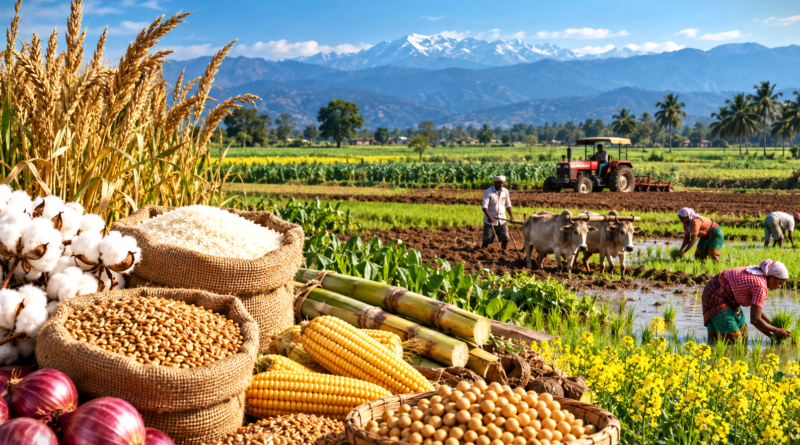
Major Agricultural Crops Grown Across Different Indian States – India Times Group
How Climate, Soil, and Regional Traditions Shape India’s Diverse Agricultural Landscape
India is one of the world’s most agriculturally diverse countries, with farming playing a central role in its economy, culture, food security, and rural livelihoods. From the fertile plains of Punjab and Haryana to the rice-growing regions of West Bengal and Odisha, and from the cotton fields of Gujarat and Maharashtra to the tea gardens of Assam, agriculture reflects the country’s extraordinary geographical variety. Different states cultivate different crops according to their climate, soil conditions, rainfall, irrigation facilities, and traditional farming practices.
Agriculture in India is not limited to food production. It supports millions of farmers, agricultural labourers, traders, food-processing industries, and transport businesses. Major crops provide raw materials for industries, contribute to exports, and influence regional cuisines and festivals. Understanding which crops grow in different Indian states helps explain the country’s agricultural strengths, regional identities, and economic development.
1. Punjab: The Land of Wheat and Rice
Punjab is among India’s most important agricultural states and is widely recognised for its contribution to national food-grain production. Its fertile alluvial soil, extensive irrigation network, and relatively level landscape provide favourable conditions for intensive farming.
Wheat is one of Punjab’s principal crops, cultivated mainly during the winter season. Rice is another major crop, particularly during the monsoon season. Together, these crops have made the state an important contributor to India’s public food-grain procurement system.
Farmers also grow maize, cotton, sugarcane, mustard, and various vegetables. Dairy farming complements crop cultivation and provides an additional source of income for rural households.
However, intensive wheat-rice cultivation has created environmental concerns, including groundwater depletion, declining soil health, and the burning of crop residue. Crop diversification towards pulses, maize, oilseeds, and other suitable alternatives is increasingly important for sustainable agriculture in Punjab.
2. Haryana: Wheat, Rice, and Mustard
Haryana is another major contributor to India’s agricultural output. Its fertile plains, irrigation infrastructure, and mechanised farming practices support the cultivation of several important crops.
Wheat and rice dominate agricultural production in many districts. Wheat is grown during the winter season, while rice is cultivated during the monsoon months in areas with suitable water availability.
Mustard is particularly significant in Haryana because it provides edible oil and offers farmers an alternative to cereal cultivation. Cotton is widely grown in suitable southwestern districts, while sugarcane, pearl millet, maize, and pulses also contribute to agricultural diversity.
The state’s proximity to major markets, including Delhi, supports the sale of fresh vegetables, milk, and other agricultural products. Improving water efficiency, soil management, and crop diversification can help Haryana maintain productivity while reducing pressure on natural resources.
3. Uttar Pradesh: Sugarcane, Wheat, and Rice
Uttar Pradesh has one of India’s largest agricultural economies, supported by fertile plains, extensive river systems, and a substantial rural population.
Wheat and rice are important food-grain crops across the state. Wheat is generally cultivated in winter, while rice is grown during the monsoon season in regions with suitable rainfall and irrigation.
Sugarcane is particularly important in western and central Uttar Pradesh. It supplies sugar mills, jaggery producers, and other agro-based industries. The relationship between sugarcane farming and sugar processing creates employment opportunities throughout the agricultural supply chain.
Other important crops include potatoes, mustard, pulses, maize, and various vegetables. Uttar Pradesh is especially recognised for its potato production, which supports food processing, storage, and distribution businesses.
Mangoes, guavas, and other fruits contribute to horticultural income in several districts. Better cold-storage facilities, modern processing units, and efficient transportation can help farmers reduce post-harvest losses and receive improved returns.
4. West Bengal: Rice and Jute
West Bengal is one of India’s major rice-producing states. Its humid climate, fertile alluvial soil, and river systems support paddy cultivation across extensive agricultural areas.
Rice is the principal food crop and forms an essential part of the state’s traditional diet. Depending on local conditions, farmers cultivate different rice varieties during different agricultural seasons.
Jute is another historically important crop, particularly in areas of the Ganges delta. Its fibres are used to manufacture sacks, ropes, packaging materials, and other products. Jute farming supports textile-related industries and provides employment in processing and manufacturing.
Potatoes, mustard, pulses, tea, and vegetables also contribute to the state’s agricultural economy. Mangoes, bananas, and other fruits are important in selected regions.
Flooding, excessive rainfall, and changing weather patterns can create difficulties for farmers. Improved drainage, climate-resilient rice varieties, and better storage facilities can help strengthen agricultural productivity.
5. Bihar: Rice, Wheat, Maize, and Pulses
Bihar’s agriculture benefits from fertile alluvial soil deposited by rivers, including the Ganga and its tributaries. Farming is a major source of livelihood, particularly in rural communities.
Rice and wheat are the state’s major food crops. Rice is cultivated during the monsoon season, while wheat is generally planted after the rainy season. Maize is also important and is grown for food, animal feed, and industrial uses.
Pulses, oilseeds, potatoes, and vegetables contribute to crop diversity. Bihar is also known for fruit cultivation, especially litchi in areas such as Muzaffarpur, as well as bananas, mangoes, and makhana in suitable wetland regions.
Despite its agricultural potential, the state faces challenges involving floods, fragmented landholdings, storage shortages, and limited access to processing infrastructure in some areas. Better irrigation management, agricultural technology, and market connections can improve farm incomes.
6. Rajasthan: Bajra, Mustard, and Pulses
Rajasthan’s agriculture is strongly influenced by its arid and semi-arid climate. Low and irregular rainfall makes drought-resistant crops particularly important.
Pearl millet, commonly known as bajra, is one of the state’s characteristic crops. It can grow under relatively dry conditions and is an important food source in many rural communities.
Mustard is another major crop, especially in regions with suitable winter conditions. It supplies seeds for edible oil production. Wheat, barley, gram, and other pulses are also cultivated where soil moisture and irrigation permit.
Cotton and guar are important in selected areas. Guar is valued for its industrial applications, including the production of guar gum, which is used in several manufacturing processes.
Rajasthan also has significant livestock farming, which complements crop production. Water conservation, rainwater harvesting, drip irrigation, and drought-resistant seed varieties are essential for improving agricultural resilience in the state.
7. Gujarat: Cotton, Groundnut, and Tobacco
Gujarat is known for its diverse agricultural production and strong connections between farming, trade, and agro-based industries.
Cotton is one of its most important commercial crops. It supplies textile and spinning industries, making it a significant source of raw material for the state’s industrial economy.
Groundnut is another major crop, particularly in the Saurashtra region. It is used for edible oil, food products, and other applications. Gujarat also produces wheat, bajra, castor, sesame, cumin, and other spices.
Tobacco is cultivated in selected areas, while sugarcane and rice are grown in regions with more favourable water availability. Horticultural products, including mangoes, bananas, and vegetables, add to agricultural income.
The state’s farmers increasingly depend on efficient irrigation, soil management, and market information to manage changing weather conditions and fluctuating crop prices.
8. Maharashtra: Cotton, Sugarcane, and Soybean
Maharashtra has a varied agricultural landscape, ranging from relatively dry inland plateaus to wetter coastal regions. Its crop patterns differ considerably according to rainfall, irrigation, and soil conditions.
Cotton is a major crop in the Vidarbha and Marathwada regions. Soybean is also widely cultivated and serves as an important source of edible oil and protein-rich animal feed.
Sugarcane is concentrated in areas with adequate irrigation, particularly parts of western Maharashtra. The crop supports sugar mills, cooperative institutions, and related industries.
Other important crops include jowar, bajra, pulses, wheat, and rice. Maharashtra is especially prominent in horticulture, with grapes, oranges, pomegranates, mangoes, and bananas grown in suitable districts.
Uncertain rainfall, drought, rising cultivation costs, and market-price fluctuations can affect farm incomes. Water-efficient farming, crop insurance, storage infrastructure, and food processing are important for supporting agricultural stability.
9. Madhya Pradesh: Soybean, Wheat, and Pulses
Madhya Pradesh has emerged as an important agricultural state because of its extensive farmland and favourable conditions for several cereal, oilseed, and pulse crops.
Soybean is one of its most prominent crops and provides raw material for edible oil production and animal feed. Wheat is another major crop, particularly in the winter season.
The state also produces gram, lentils, maize, rice, mustard, and other oilseeds. Pulses are especially valuable because they provide protein for human consumption and can contribute to soil fertility through biological nitrogen fixation.
Cotton is cultivated in suitable areas, while horticultural crops support additional sources of rural income.
The diversity of crops helps Madhya Pradesh serve several agricultural markets. Improving irrigation coverage, crop storage, processing facilities, and transportation can reduce losses and strengthen the position of farmers in domestic supply chains.
10. Assam: Tea, Rice, and Jute
Assam is internationally recognised for its tea plantations, which form a distinctive part of its agricultural landscape. The state’s humid climate, abundant rainfall, and suitable growing conditions help support tea cultivation.
Tea is an important commercial crop and provides employment in plantations, processing factories, packaging facilities, and transportation.
Rice is the principal food crop and is cultivated widely across the state’s fertile valleys. Jute, mustard, pulses, sugarcane, and various vegetables are also grown.
Assam produces fruits such as bananas, pineapples, oranges, and citrus varieties. These crops contribute to household consumption and commercial horticulture.
Floods, riverbank erosion, and changing rainfall patterns can disrupt agricultural activities. Better flood management, improved storage facilities, crop diversification, and stronger market access are important for protecting farmers’ livelihoods.
11. Karnataka: Coffee, Ragi, and Sugarcane
Karnataka’s agricultural diversity reflects its varied elevation, rainfall, and soil conditions. The state produces both traditional food crops and commercially valuable plantation crops.
Coffee is particularly important in the Western Ghats districts of Kodagu, Chikkamagaluru, and Hassan. Coffee plantations contribute to exports, tourism, and rural employment.
Ragi, or finger millet, is a significant traditional crop, especially in southern Karnataka. Its ability to grow under relatively dry conditions makes it valuable in regions facing water constraints.
Sugarcane, maize, rice, cotton, and pulses are also widely cultivated. Arecanut, coconut, spices, and horticultural crops support agricultural incomes in suitable areas.
Karnataka is also known for its production of fruits and vegetables, including grapes, mangoes, and tomatoes. Sustainable irrigation, improved storage, and diversified farming systems can help farmers manage changing climatic conditions.
12. Kerala: Coconut, Rubber, and Spices
Kerala’s agriculture is strongly shaped by its tropical climate, heavy rainfall, coastal plains, and hilly terrain.
Coconut is one of the state’s most recognisable crops. It provides products such as coconut oil, coir fibre, and food ingredients. Rubber is another major commercial crop, supporting processing industries and numerous smallholder farmers.
Kerala is also famous for spices, including black pepper, cardamom, cloves, and nutmeg. These crops have historical connections with regional trade and continue to contribute to the state’s agricultural identity.
Paddy cultivation remains important in selected lowland areas, while banana, tapioca, tea, and coffee are cultivated in suitable regions.
Land availability, rising production costs, crop diseases, and changing rainfall patterns present challenges. Value-added products, sustainable plantation management, and improved marketing can help farmers capture more value from their produce.
13. Tamil Nadu: Rice, Sugarcane, and Cotton
Tamil Nadu has a varied agricultural economy supported by river irrigation, reservoirs, groundwater, and seasonal rainfall.
Rice is a major staple crop, particularly in the Cauvery delta. The crop plays an important role in local food traditions and rural employment.
Sugarcane is cultivated for sugar production, jaggery, and related industrial uses. Cotton supports textile manufacturing, while groundnut, millets, pulses, and maize contribute to agricultural diversity.
The state also produces bananas, mangoes, coconuts, and a wide range of vegetables. Plantation crops and spices are important in selected hilly regions.
Water management is a major concern because rainfall varies significantly across districts and droughts can affect crop yields. Efficient irrigation, improved water storage, and the cultivation of suitable millets and other less water-intensive crops can support long-term sustainability.
14. Andhra Pradesh and Telangana: Rice, Cotton, and Chilli
Andhra Pradesh and Telangana have important agricultural sectors, although their crop patterns differ according to local conditions.
Rice is a major crop in Andhra Pradesh, particularly in areas with access to irrigation and favourable delta conditions. Aquaculture and horticulture also contribute substantially to the state’s rural economy.
Cotton, chilli, tobacco, groundnut, pulses, and sugarcane are grown in different regions. Andhra Pradesh is particularly known for chilli cultivation, which supplies domestic markets and spice-processing businesses.
Telangana produces rice, cotton, maize, soybean, pulses, and other crops. Cotton is especially important in several districts, while rice cultivation has expanded in areas supported by irrigation.
Both states face challenges related to rainfall variability, input costs, and market fluctuations. Efficient water use, crop diversification, improved storage, and stronger links between farmers and processing industries can help create more stable agricultural incomes.
15. Odisha: Rice, Pulses, and Oilseeds
Odisha’s agricultural economy is closely connected with its monsoon climate, coastal plains, river valleys, and upland regions.
Rice is the dominant food crop and is cultivated extensively across the state. Paddy farming supports rural households and contributes to regional food security.
Pulses, oilseeds, maize, millets, and vegetables are also important. In tribal and upland areas, crops such as ragi and other millets provide valuable sources of nutrition and are suited to particular local farming conditions.
Coconut, cashew, turmeric, and other horticultural crops contribute to commercial agriculture in suitable locations.
Cyclones, floods, droughts, and irregular rainfall can threaten agricultural production. Climate-resilient seeds, better drainage, water conservation, and improved crop insurance arrangements can help farmers manage these risks.
16. Himachal Pradesh and Uttarakhand: Fruits, Rice, and Millets
The Himalayan states of Himachal Pradesh and Uttarakhand have agricultural systems shaped by mountains, valleys, differences in elevation, and varying climatic conditions.
Himachal Pradesh is particularly known for apple cultivation. Apples and other temperate fruits support orchard owners, seasonal workers, packing businesses, and transportation networks. Maize, wheat, barley, and pulses are also grown.
Uttarakhand produces rice, wheat, maize, mandua, or finger millet, and other traditional crops. Its plains support more intensive cultivation, while hill districts often depend on small farms and mixed agricultural systems.
Mandua, jhangora, pulses, and locally adapted crops remain important in many mountain communities. Fruits, vegetables, and aromatic plants also provide opportunities for diversification.
Mountain farming faces challenges involving small landholdings, wildlife damage, limited transportation, soil erosion, and changing weather patterns. Better roads, local processing facilities, orchard management, and the promotion of traditional crops can strengthen rural livelihoods.
17. Jammu and Kashmir: Apples, Saffron, and Rice
Jammu and Kashmir has distinctive agricultural strengths arising from its valleys, mountain environment, and differences in temperature and rainfall.
Apple cultivation is particularly important in the Kashmir Valley. Apples support orchard owners, seasonal workers, packaging facilities, cold-storage businesses, and traders.
Saffron is another valuable crop, especially in areas around Pampore. Its cultivation requires specialised knowledge and contributes to the region’s agricultural heritage.
Rice, maize, wheat, walnuts, almonds, and other fruits are also cultivated in suitable locations. Jammu’s warmer areas have different cropping patterns from the cooler Kashmir Valley and higher mountain districts.
Weather extremes, orchard diseases, storage limitations, and transportation difficulties can affect farmers’ earnings. Improved cold chains, modern orchard practices, and better processing facilities can help protect product quality and market value.
The Importance of Agricultural Diversity in India
The distribution of crops across Indian states demonstrates how closely agriculture depends on geography and natural resources. Wheat thrives in many northern plains, rice dominates numerous eastern and southern farming regions, and millets remain valuable in drier areas. Cotton supports textile industries, sugarcane supplies sugar mills, and tea, coffee, spices, and fruits contribute to commercial agriculture.
This diversity also helps India manage food requirements, supply raw materials to industries, and support rural employment. However, farmers across different regions face shared challenges, including unpredictable weather, water shortages, soil degradation, rising production costs, limited storage, and unstable market prices.
Agricultural development therefore requires more than increasing crop yields. Farmers need reliable irrigation, access to quality seeds, affordable technology, timely weather information, efficient transportation, and fair opportunities to sell their produce. Crop insurance, agricultural research, cooperatives, and food-processing facilities can further strengthen rural economies.
Crop diversification is particularly important. Growing the same crops continuously can increase pressure on soil and water resources. Introducing suitable pulses, oilseeds, millets, vegetables, and other alternatives can improve resilience while creating new income opportunities. The most appropriate choices depend on local climate, available water, market demand, and farmers’ resources.
Conclusion
Major agricultural crops grown across Indian states reveal the country’s remarkable regional diversity. From Punjab’s wheat fields and West Bengal’s rice-growing landscapes to Gujarat’s groundnut farms, Karnataka’s coffee plantations, Kerala’s spice gardens, and Kashmir’s apple orchards, each region contributes something distinctive to India’s agricultural economy.
These crops are not merely agricultural products; they are connected to food traditions, local identities, employment, trade, and rural development. Protecting this diversity requires sustainable farming practices, better infrastructure, modern agricultural knowledge, and greater attention to farmers’ needs.
By combining traditional experience with appropriate technology and climate-resilient practices, India can strengthen agricultural productivity while conserving natural resources. A diverse, sustainable, and farmer-focused agricultural system will remain essential for the country’s long-term food security and economic progress.